

Table of Contents
- Why Receding Gums May Cause Sensitivity
- Choosing a Suitable Toothpaste
- What Nano-Hydroxyapatite May Support
- Managing Sensitivity
- What Toothpaste Cannot Fix
- Diet and Post-Procedure Care
- When to Seek Dental Care
- Conclusion
- Frequently Asked Questions
Last Updated: October 6, 2026
Why Receding Gums May Cause Sensitivity
Gum recession can expose root surfaces and contribute to brief pain from cold, touch, or sweet foods. It is not the only possible cause of dental pain. Decay, cracks, and other conditions may need assessment.
Exposed Root Surfaces
Roots do not have the enamel covering found on the crown. Exposed dentin contains microscopic tubules where fluid movement can stimulate nerves. Tubules are in dentin, not enamel. Recession does not automatically establish why a particular tooth hurts.
Choosing a Suitable Toothpaste
There is no universally best formula for every person with recession. Consider the cause of symptoms, cavity risk, abrasiveness, tolerance, and evidence for the finished product.
| Ingredient | Role to Discuss | Important Limit |
|---|---|---|
| Potassium nitrate | Used in some formulas to reduce sensitivity through effects on nerve response | Does not treat gum recession; results depend on the product and cause of pain |
| Stannous fluoride | Used in formulas for sensitivity, cavity prevention, and other oral-care outcomes | Performance and tolerance depend on the complete formula |
| Nano-hydroxyapatite | May support remineralization and help cover exposed dentin tubules | Does not regrow gums or missing tooth structure |
| Arginine and calcium systems | Studied in some sensitivity formulations | Do not assume all such products are fluoride-free or equally effective |
Choose Care With Your Dentist
Do not assign ingredients to mild, moderate, or advanced recession from appearance alone. Your dentist can assess root exposure, gum health, decay risk, and whether treatment beyond toothpaste is needed.
What to Look For on the Label
Check intended use, age guidance, ingredients, and directions. Concentration and particle characteristics can help describe a formula, but neither establishes results by itself. Ask about abrasiveness if exposed roots are a concern.
A fluoride-free choice should be discussed before replacing recommended fluoride care, especially with high cavity risk. A fluoride-free label does not establish gentleness or safe swallowing.
Stannous Fluoride and Potassium Nitrate
These ingredients have different roles in sensitivity formulas. This guide does not establish that one is always faster, gentler, or better for a particular recession stage. Compare product-specific evidence and dental advice rather than switching or alternating based on a general ranking.
The Complete Formula Matters
Ingredient delivery, other components, and directions affect a finished product. A laboratory mechanism does not establish that it produces a permanent protective layer or structural repair in every user.
What Nano-Hydroxyapatite May Support
Nano-hydroxyapatite may support remineralization and may help cover exposed dentin tubules, potentially helping manage sensitivity. These potential benefits are not guaranteed surface rebuilding, permanent relief, or treatment for gum disease.
Aftology's 10% Nano-Hydroxyapatite Toothpaste uses 20 nm rods as a deliberate formulation choice. Particle size matters alongside shape, dispersion, concentration, and the complete formula. Neither 10% nor smaller size alone establishes superiority, an optimal size for every outcome, or a universal effectiveness threshold. Lower concentrations should not be dismissed without relevant comparative evidence.

Managing Sensitivity
Gentle brushing and an appropriate sensitivity formula may be part of care, but do not assume brushing caused every case of recession or that changing toothpaste resolves it. Seek advice about the underlying cause.
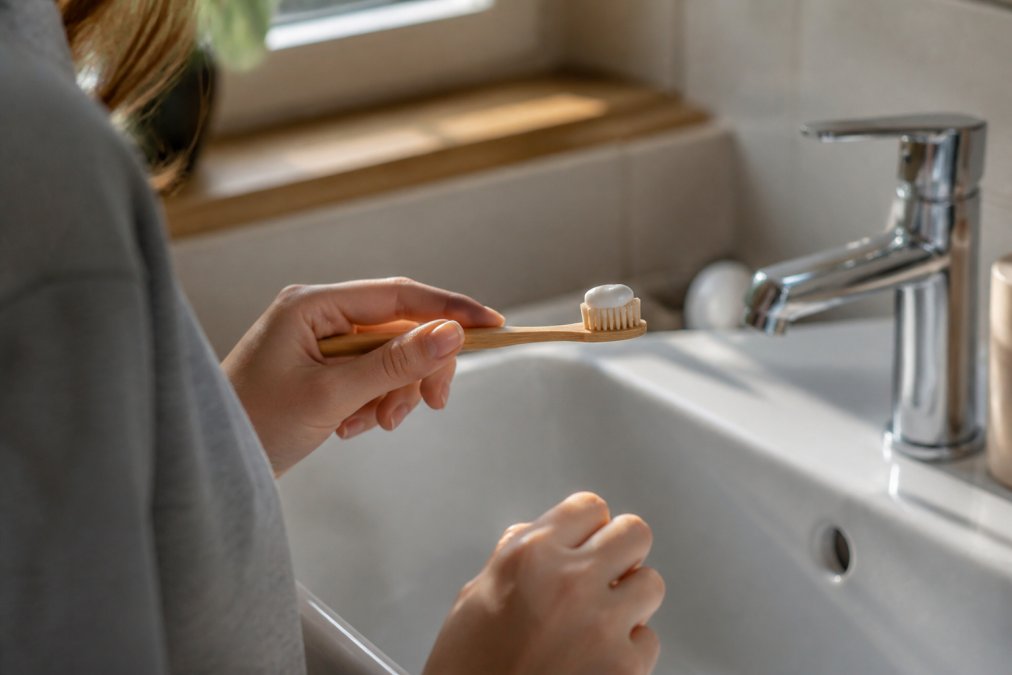
Gentle Brushing and Abrasiveness
Use a soft-bristled brush and light pressure, covering all surfaces for two minutes, twice daily. Clean between teeth using a suitable method. Follow product directions and seek technique advice if brushing hurts.
Relative Dentin Abrasivity is one measure to discuss with your dentist. This guide does not establish 100 as a universal safe-versus-unsafe cutoff for every person with exposed roots. Technique, formula, and tooth condition also matter.
What Toothpaste Cannot Fix
Toothpaste cannot regrow gum tissue, regrow missing enamel, restore a developed cavity, or treat periodontal disease. Supporting remineralization of early mineral loss differs from replacing lost structure.
Symptom relief does not prove recession has stopped. A dentist can assess ongoing tissue loss and discuss preventive care or treatment when appropriate.
Diet and Post-Procedure Care
Acid Exposure and Root Surfaces
Frequent acidic exposures can challenge tooth surfaces, including exposed roots. They should not be described as automatically worsening gum recession itself. Drinks vary in erosive potential, and frequency and contact time matter.
Practical Advice About Acid Exposure
Limit repeated acidic and sugary exposures and consider water for clearing residue. Ask your dentist about brushing timing after acidic foods, reflux, or vomiting rather than relying on a universal waiting period or homemade rinse recipe.
Factors to Discuss With Your Dentist
Discuss brushing pressure, tobacco use, oral jewelry, grinding, and reflux if relevant. These factors require individual assessment; none proves the cause of recession or establishes that a night guard or toothpaste alone is the solution.
After Dental Procedures
After scaling, root planing, grafting, or another procedure, follow your clinician's specific instructions about brushing, rinses, food, medicines, and when to resume products. Do not replace a prescribed treatment with toothpaste.
New or worsening pain, swelling, or unexpected symptoms should be discussed with the treating clinician rather than assumed normal for a stated number of weeks or months.
When to Seek Dental Care
Have persistent sensitivity, lingering pain, bleeding gums, swelling, loose teeth, or ongoing recession assessed. These symptoms do not diagnose periodontitis by themselves, but can indicate a problem that toothpaste cannot address.
Conclusion
Aftology's 10% Nano-Hydroxyapatite Toothpaste uses 20 nm rods. Hydroxyapatite may support remineralization and may help cover exposed dentin tubules, but those specifications do not establish a research-standard dose, guaranteed relief, or prevention of further recession. Choose care based on your symptoms and your dentist's advice.
Frequently Asked Questions
Can toothpaste help with receding gums?
A suitable toothpaste may help manage associated sensitivity, depending on the formula and cause of pain. It cannot regrow gums or treat gum disease. Have ongoing recession assessed rather than assuming reduced pain means tissue loss has stopped.
May nano-hydroxyapatite help recession-related sensitivity?
It may support remineralization and may help cover exposed dentin tubules. Aftology uses 10% nano-hydroxyapatite and 20 nm rods as deliberate choices, but neither specification guarantees relief or superiority. There is no fixed result timeline for every person.
What is the best desensitizing ingredient?
There is no universally best ingredient for every case. Potassium nitrate, stannous fluoride, hydroxyapatite, and other systems have different roles. Compare complete formulas and dental advice, including cavity risk, abrasiveness, and tolerance.
What should I do if my teeth hurt as my gums recede?
Use gentle brushing and seek dental assessment of the cause. An appropriate sensitivity toothpaste may be part of care, but persistent, sharp, worsening, or lingering pain requires advice. Do not wait through a promised improvement window or replace recommended treatment on your own.
A purchase guarantee is not clinical evidence of effectiveness or a result timeline. Consider the complete formulation and your dental needs rather than treating concentration alone as proof of repair.