

Table of Contents
- What Is Nano-Hydroxyapatite and How Does It Work?
- What to Expect Over Time
- Using Toothpaste for Sensitivity
- Hydroxyapatite and Fluoride: Comparing Evidence
- Factors That May Affect Results
- Tracking Changes Without Assuming Repair
- Common Mistakes to Avoid
- Frequently Asked Questions
What Is Nano-Hydroxyapatite and How Does It Work?
Nano-hydroxyapatite is a calcium phosphate mineral similar to the mineral in teeth. In toothpaste, it may support remineralization and may help cover exposed dentin tubules, potentially helping manage sensitivity. These are studied effects, not guaranteed results for every formula or person.
Tubules are in dentin, not enamel. Supporting early mineral loss is different from regrowing missing enamel or repairing a developed cavity. Toothpaste should not be described as automatically filling every defect, rebuilding teeth from within, or becoming part of tooth structure in every user.
Aftology's 10% nano-hydroxyapatite toothpaste uses 20 nm rods as a deliberate formulation choice. Particle size and shape matter to formulation design, alongside concentration, dispersion, and other ingredients. Ten percent is not a universal effectiveness threshold, and neither concentration nor size alone establishes superiority over another product.

Aftology's formula is fluoride-free. That may suit personal preferences, but it does not establish equivalent cavity protection or suitability for every dental need. Ask your dentist before replacing a recommended fluoride routine, especially if you have frequent cavities or dry mouth.
What to Expect Over Time
How long it takes to notice changes varies widely. Some people may notice changes in sensitivity over several weeks, while others may notice little or no improvement. These are not promised outcomes, and a study's observation period is not a universal timeline for a finished product.
Sensitivity Relief: Results Vary
Hydroxyapatite may help cover exposed dentin tubules, but relief depends on the formula and the cause of pain. There is no reliable week-by-week schedule that applies to everyone.
Keep track of symptoms, but do not assume worsening pain means treatment is working. Persistent, sharp, or worsening sensitivity needs dental assessment rather than waiting through a promised result window.
Remineralization and Its Limits
Hydroxyapatite may support remineralization of early demineralized areas. Laboratory measurements of mineral content or surface hardness do not automatically translate into visible enamel gains on a fixed schedule.
Missing tooth structure cannot regrow through toothpaste use. Smoothness, shine, or reduced sensitivity alone does not prove that structural damage has been repaired. Your dentist can assess whether there is early mineral loss, erosion, decay, or another condition requiring care.
Using Toothpaste for Sensitivity
Follow product directions and your dental team's advice. Consistent oral care is important, but correct use does not guarantee a particular result or faster relief.
Daily Brushing Routine
Brush gently for two minutes, twice daily, covering all tooth surfaces. Use an amount appropriate to the product directions and the person's age. Spit out toothpaste rather than intentionally swallowing it, and supervise children.
Instructions about rinsing or waiting before eating should follow the product directions or your dentist's advice, not an unsupported universal mineral-release schedule.
Consistency and Long-Term Care
Maintain brushing, interdental cleaning, and dental reviews. A consistent routine supports oral health, but does not establish that improvement must occur by a certain week or that stopping one ingredient automatically reverses measured gains.
Record the situations that trigger discomfort and any changes you notice. Share those observations with your dentist; they are useful information, not a diagnosis of remineralization.
Hydroxyapatite and Fluoride: Comparing Evidence
Fluoride supports remineralization and has established evidence for cavity prevention. Hydroxyapatite is studied for mineral deposition and sensitivity management. Their mechanisms differ, but neither should be described as universally faster or better based on ingredient category alone.
Comparisons require studies of specific formulations and outcomes. This article does not claim that hydroxyapatite provides superior repair, proven equivalence to fluoride, or an absence of systemic absorption concerns.
Nano-Hydroxyapatite Toothpaste →
Aftology uses 10% nano-hydroxyapatite and 20 nm rods. Consider the complete formula, relevant evidence, and your dentist's advice when choosing a routine for sensitivity or cavity risk.
Factors That May Affect Results
Symptoms, tooth condition, saliva, daily habits, and the complete formulation may affect whether and when you notice changes. They do not provide a reliable timetable for each person.
The Cause and Severity of Symptoms
Sensitivity may be associated with exposed dentin, but decay, cracks, gum problems, and other conditions can also cause pain. Mild, moderate, and severe symptoms should not be assigned guaranteed treatment timelines. Constant pain or marked sensitivity deserves assessment, not a longer home-treatment trial.
Diet and Daily Habits
Frequent acidic drinks, reflux, and aggressive brushing can challenge tooth health. Ask your dentist about reducing acid exposure and using gentle technique. Changing these habits may support care, but it does not guarantee improvement within a stated number of weeks.
- Consider water instead of frequent acidic beverages.
- Avoid forceful scrubbing and use a suitable toothbrush.
- Ask about brushing timing if reflux or vomiting is frequent.
- Clean between teeth as advised.
Individual Variation
Age alone does not predict how quickly a toothpaste will work. Saliva flow, medical conditions, medications, and the underlying dental problem may be relevant. If your mouth is persistently dry, ask your dentist or clinician about suitable care rather than relying on a fixed age-based timeline.
Tracking Changes Without Assuming Repair
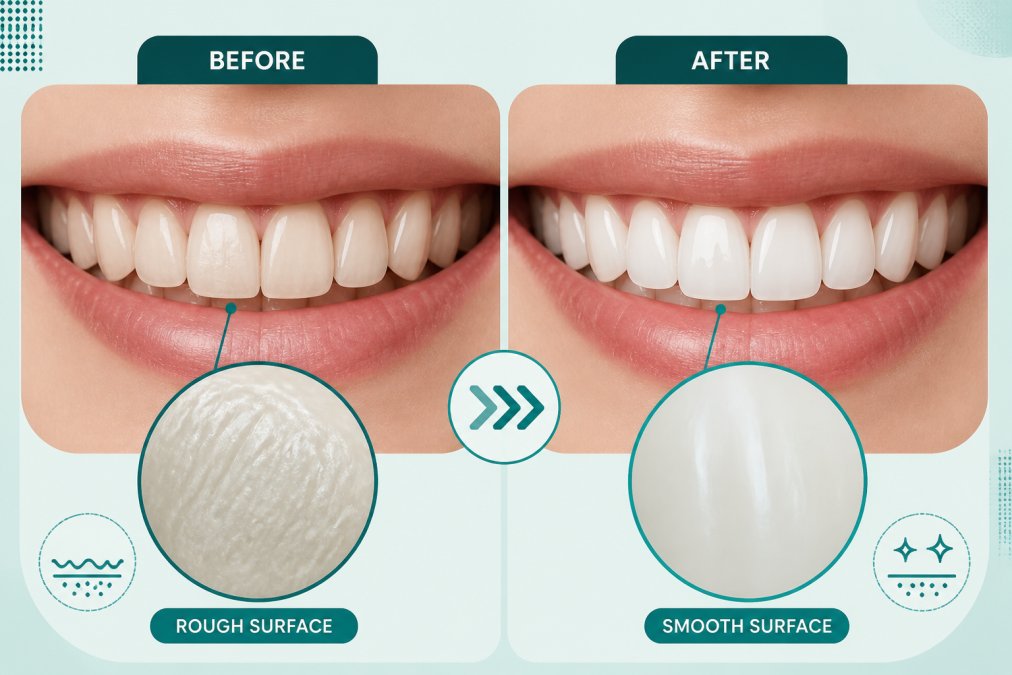
Changes in comfort, texture, or appearance can be worth noting, but they are not proof that enamel has rebuilt. A dental examination is a better basis for assessing tooth health and whether treatment is needed.
Common Mistakes to Avoid
Do not treat a study duration as a promised result timeline, assume 10% or 20 nm guarantees effectiveness, or interpret worsening pain as healing. Lack of improvement does not automatically mean you used toothpaste incorrectly. Persistent symptoms may have a cause that needs professional care.
Frequently Asked Questions
How long does it take nano-hydroxyapatite to reduce tooth sensitivity?
Results vary widely. Some people may notice changes over several weeks, while others may not improve. Hydroxyapatite may help cover exposed dentin tubules, but formulation, regular use, and the cause of symptoms matter. These are not promised outcomes. Seek dental advice for persistent, sharp, or worsening pain.
How does nano-hydroxyapatite compare with fluoride?
Fluoride supports remineralization and has established evidence for cavity prevention. Hydroxyapatite is studied for mineral deposition and sensitivity management and may support remineralization. Comparisons depend on the specific formulations and outcomes; this does not establish proven superiority, universal equivalence, or an absence of systemic exposure.
Can toothpaste help if I have severe enamel erosion?
It may be part of a care routine, but severe erosion requires dental assessment. Toothpaste cannot regrow missing enamel or restore a developed cavity. Do not postpone care on the assumption that a longer trial will repair structural loss.
How can I tell whether it is working without sensitivity?
Smoothness or shine alone does not establish remineralization. Your dentist can assess tooth health and changes over time. Maintain an appropriate routine and seek advice for visible damage, pain, or other changes.