

Table of Contents
- Why Ingredient Transparency Matters
- Sodium Lauryl Sulfate and Oral Comfort
- Foaming Agents and Individual Sensitivity
- Sweeteners: Evaluate the Complete Formula
- Nano-Hydroxyapatite: Concentration and Particle Size
- Choosing Toothpaste for Sensitive Teeth
- Reading Toothpaste Labels
- Changing Your Toothpaste
- Frequently Asked Questions
Why Ingredient Transparency Matters
Choosing fluoride-free toothpaste is a personal decision, but fluoride-free does not automatically mean safer, less irritating, or better for your cavity risk. Likewise, natural and synthetic are not reliable substitutes for evidence about the complete formulation.
Read the ingredient list and directions, consider your dental needs, and ask your dentist about persistent sensitivity, gum symptoms, or a history of cavities. An ingredient name alone is not enough to label a finished toothpaste toxic.
Sodium Lauryl Sulfate and Oral Comfort
Sodium lauryl sulfate (SLS) is a foaming agent used in some toothpastes. People who find a formula irritating may prefer an SLS-free option. That does not establish that SLS causes systemic harm during ordinary toothpaste use or that every SLS-containing formula is unsuitable.
If you have sensitive teeth, recurring sores, or inflamed gums, discuss your symptoms and product choices with a dentist. Improvement after switching products may be useful information, but it does not independently diagnose the cause.
Foaming Agents and Individual Sensitivity
Foaming agents help distribute a toothpaste and affect its feel. Products may use SLS, sodium laureth sulfate, cocamidopropyl betaine, sodium cocoyl isethionate, or other ingredients. Suitability depends on the complete formula and the person using it.
A coconut-derived or plant-associated name does not guarantee that an ingredient cannot irritate you. Conversely, a synthetic ingredient should not be dismissed solely because it is synthetic. If a toothpaste causes irritation, stop using it and seek advice about an appropriate alternative.
Sweeteners: Evaluate the Complete Formula
Toothpastes may use ingredients such as saccharin, sorbitol, xylitol, stevia, or erythritol to improve flavor or texture. The ingredient name alone does not establish harmful systemic exposure, kidney burden, or worsening decay during normal use.
Choose a flavor and formula you can use comfortably, follow directions, and avoid intentional swallowing. If you have a known allergy, intolerance, or medical dietary restriction, ask your clinician about suitability.
Nano-Hydroxyapatite: Concentration and Particle Size
Nano-hydroxyapatite is a calcium phosphate mineral similar to the mineral in teeth. It is studied for mineral deposition and sensitivity management. Its resemblance to tooth mineral does not guarantee that every formulation is effective, non-irritating, or suitable for everyone.
Nano-Hydroxyapatite Toothpaste →
Particle size and shape matter to formulation design and can influence interaction with tooth surfaces. Aftology uses 20 nm hydroxyapatite rods as a deliberate formulation choice. Size should be considered alongside concentration, dispersion, and other ingredients, rather than described as universally optimal or used to dismiss larger particles without a relevant comparison.
Aftology's toothpaste contains 10% nano-hydroxyapatite. Ten percent is not a universal effectiveness threshold. Lower concentrations may also offer benefits; comparisons require evidence for the specific formulations and the outcomes measured.

Other mineral ingredients can have useful roles in cleaning or remineralization systems. Do not assume that an alternative ingredient is ineffective simply because it is not nano-hydroxyapatite. Evaluate the finished formula and relevant evidence.
Remineralization can support early mineral loss, but toothpaste cannot regrow missing enamel, repair a developed cavity, or replace needed dental treatment.
Choosing Toothpaste for Sensitive Teeth
Sensitivity can occur when dentin tubules are exposed, but decay, cracks, gum problems, and other conditions can also cause pain. Ask a dentist to assess persistent or worsening symptoms rather than assuming every case is suitable for home treatment.
Different sensitivity formulas use ingredients such as hydroxyapatite, potassium nitrate, or arginine-based systems. Performance depends on the complete formulation and the cause of discomfort; no ingredient or concentration guarantees immediate relief.
- Consider evidence relevant to the finished product and your intended outcome.
- Check the ingredient list and directions for suitability.
- Choose a formula you can use comfortably with gentle brushing.
- Do not assume natural ingredients are automatically safer or more effective.
Reading Toothpaste Labels
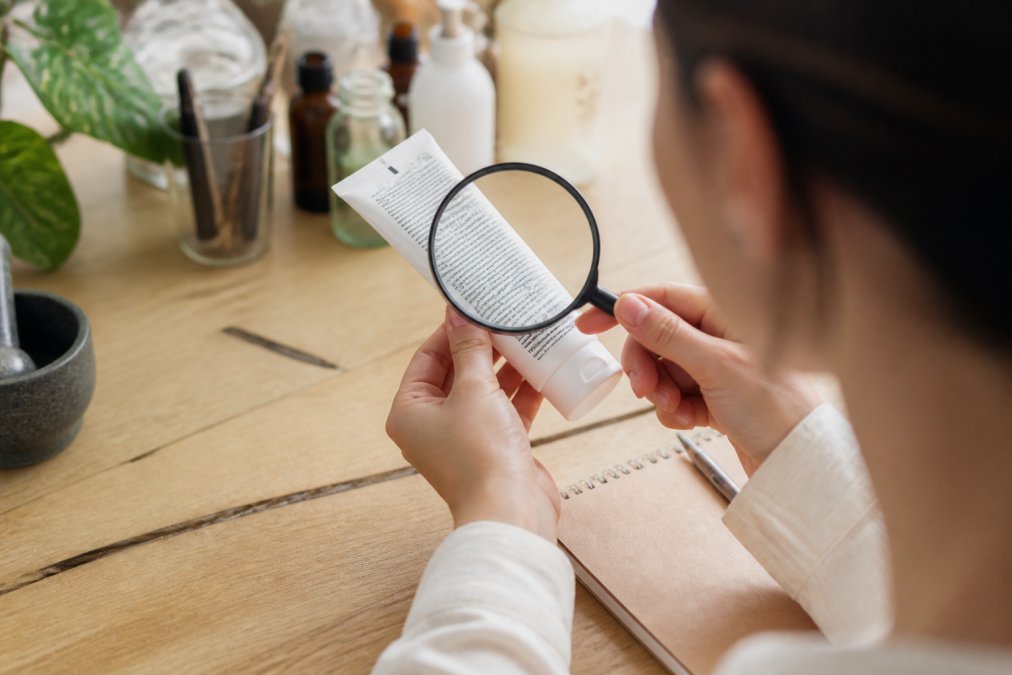
Use labels to understand the formula, not to infer a health risk from an unfamiliar chemical name. Preservatives, flavors, sweeteners, and cleaning ingredients have different purposes. If you need to avoid a specific allergen or irritant, look for it directly or ask the manufacturer for clarification.
| What to check | Useful question |
|---|---|
| Foaming and flavor ingredients | Does this formula feel comfortable, and does it contain an ingredient I know irritates me? |
| Mineral ingredients | What evidence supports the intended benefit of the complete formulation? |
| Concentration and particle characteristics | Are these disclosed, and are comparison claims supported rather than assumed? |
| Directions and age guidance | Is this product appropriate for the person using it? |
| Medical or allergy concerns | Should I ask my dentist or clinician before switching? |
Changing Your Toothpaste
Worsening sensitivity is not proof that your mouth is healing. If pain increases, irritation develops, or symptoms persist, seek dental advice rather than continuing through a fixed trial period.
If you have frequent cavities, active decay, or dry mouth, ask your dentist before replacing a recommended fluoride routine. Fluoride supports remineralization and established cavity prevention; it should not be described as only working through systemic absorption.
Frequently Asked Questions
Which ingredients should I avoid?
Avoid ingredients you know cause an allergic reaction or irritation for you, and seek advice if you are unsure. Synthetic or unfamiliar names do not by themselves establish that a toothpaste is toxic. Consider the complete formula and use it as directed.
Is nano-hydroxyapatite an alternative to fluoride?
It is an option studied for remineralization and sensitivity management, but do not assume it is interchangeable with a dentist-recommended fluoride routine for everyone. Suitability depends on your cavity risk, the formulation, and the evidence. A 10% concentration is not a universal effectiveness threshold or a safety guarantee.
Should I choose an SLS-free formula?
An SLS-free formula may be worth discussing if you find your toothpaste irritating or have recurring mouth discomfort. It does not guarantee that every alternative formula will suit you. Ask your dentist about persistent sores or gum symptoms.
How long does it take to see results?
Timing varies with the formula, routine, and underlying condition. Concentration and particle size alone do not guarantee a particular timeline. Persistent, sharp, or worsening pain deserves dental assessment rather than waiting for a promised result.