

Is Nano-Hydroxyapatite Safe During Pregnancy?
Nano-hydroxyapatite is a calcium phosphate mineral similar to the mineral found in tooth enamel. It is used in some toothpastes to support remineralization and help manage sensitivity. General oral-care safety findings should not be presented as proof of safety specifically during pregnancy or fetal development.
Hydroxyapatite has a long history of use in dental and medical materials. Its recognition as safe for specified food-additive uses is a separate matter from toothpaste regulation: it does not establish that every nano-hydroxyapatite toothpaste has been approved for cavity prevention or studied during pregnancy.
What the 2023 SCCS Review Found
The European Union's Scientific Committee on Consumer Safety (SCCS) concluded in its March 2023 opinion on hydroxyapatite (nano), SCCS/1648/22 that the material assessed was safe at concentrations up to 10% in toothpaste under the conditions reviewed.
That conclusion applies only to particles meeting the opinion's specifications: uncoated, non-surface-modified, rod-shaped particles, with at least 95.8% having an aspect ratio below 3 and the remaining 4.2% not exceeding 4.9. It does not apply to needle-shaped particles or sprayable products that could expose the lungs to nanoparticles.
This is a general cosmetic safety assessment, not a pregnancy-specific clinical study or clearance. It should not be used to claim that fetal exposure is impossible, that swallowing poses no risk, or that allergic reactions cannot occur. Matching a 10% concentration alone does not establish that an individual product meets every SCCS specification.
US Regulation Is Different From Food-Additive Safety
Hydroxyapatite's food-additive safety status is not approval as an anticavity toothpaste ingredient. In the US, a toothpaste marketed for ordinary cleaning without drug claims is generally a cosmetic. Hydroxyapatite is not an FDA-approved OTC anticavity active ingredient; fluoride ingredients hold that status. Claims to prevent or treat cavities can affect a product's regulatory classification.
Choosing Toothpaste During Pregnancy
Discuss your cavity risk, sensitivity, reflux, and ingredient preferences with your dentist. Do not assume that fluoride-free means safer during pregnancy, or stop a dentist-recommended fluoride routine solely because a toothpaste contains hydroxyapatite.
Pregnancy can bring gum sensitivity, bleeding, nausea, and acid exposure from vomiting or reflux. Toothpaste is only one part of care. Persistent pain, swelling, bleeding, or suspected decay deserves dental assessment rather than a change of toothpaste alone.
Concentration and Particle Size: Avoid Absolute Claims
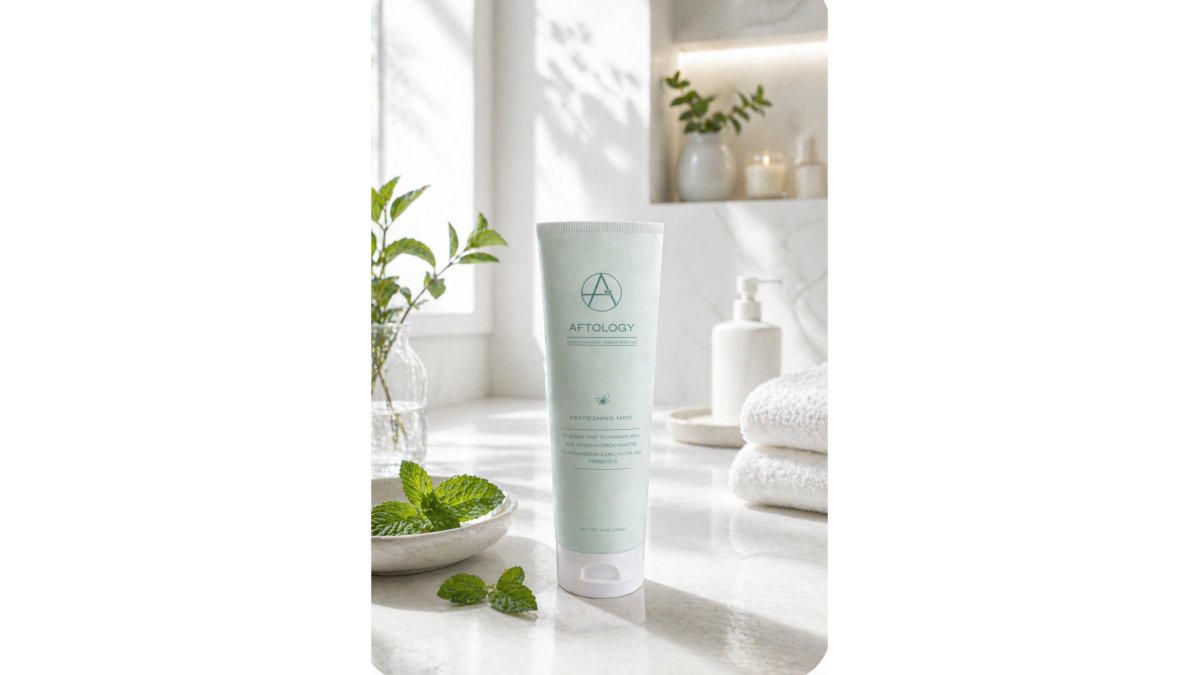
Aftology's Nano-Hydroxyapatite Toothpaste contains 10% nano-hydroxyapatite. Concentration, particle characteristics, the complete formulation, and the outcomes measured all matter when evaluating evidence.
Ten percent should not be described as a universal minimum or threshold for effectiveness. Lower concentrations should not be dismissed without evidence comparing the specific formulations. Likewise, a stated particle size such as 20 nanometers is not, by itself, proof of optimal performance, superior safety, or pregnancy suitability.

Check the Whole Formula
Review the full ingredient list and directions, not just the hydroxyapatite percentage. If foaming agents, flavors, or whitening ingredients irritate your mouth or worsen nausea, ask your dentist about alternatives. Natural ingredients are not automatically safer, and suitability varies by person.
Use toothpaste as directed, spit it out, and avoid intentional swallowing. Keep brushing and cleaning between teeth, and ask your dentist about appropriate care if reflux or vomiting is frequent. Do not delay needed dental treatment on the assumption that toothpaste can replace it.
Explore Aftology's 10% Nano-Hydroxyapatite Toothpaste →
Frequently Asked Questions
Has nano-hydroxyapatite been cleared specifically for pregnancy?
The 2023 SCCS opinion should not be described as pregnancy-specific clearance. General ingredient safety evidence does not establish an absence of risks to fetal development. Ask your dentist or pregnancy care clinician about your individual circumstances.
Does 10% guarantee better results than lower concentrations?
No universal superiority claim should be made from concentration alone. Product-specific evidence, the complete formulation, and the condition being addressed matter.
Should I replace fluoride toothpaste during pregnancy?
Not solely on the basis of pregnancy or claims that hydroxyapatite avoids all systemic risk. Your dentist can recommend a routine based on cavity risk and sensitivity.
Can this toothpaste replace dental treatment?
No. Remineralizing toothpaste may support care for early mineral loss or sensitivity, but it cannot restore missing tooth structure or treat every cause of pain. Seek dental advice for persistent symptoms.