

Table of Contents
- What Is Tooth Enamel and Why It Matters
- Signs of Enamel Erosion You Shouldn't Ignore
- Natural Approaches to Enamel Repair: What Works and What Doesn't
- Professional Fluoride Varnish vs Toothpaste: Clinical Evidence
- When to Choose Professional Dental Treatments Over Home Care
- Cost-Benefit Analysis: Home Remineralization vs Professional Intervention
- Long-Term Success: Combining Natural and Professional Approaches
- Frequently Asked Questions
Last Updated: September 28, 2026
What Is Tooth Enamel and Why It Matters
Tooth enamel is the hard, crystalline outer layer of your teeth composed primarily of hydroxyapatite, a calcium phosphate mineral. Unlike bone, enamel contains no living cells and cannot repair itself once damaged. This makes understanding enamel health essential for long-term dental wellness.
Your enamel serves as a protective barrier against decay, sensitivity, and damage. When it erodes, the softer dentin underneath becomes exposed, leading to pain and accelerated tooth deterioration. The challenge isn't just cosmetic, compromised enamel fundamentally changes how your teeth function.
Enamel repair requires combining preventative care with targeted intervention. The answer depends on understanding what each approach accomplishes and when to use it.
Signs of Enamel Erosion You Shouldn't Ignore
Enamel erosion develops gradually, but certain warning signs demand attention before the damage becomes severe. Tooth sensitivity to hot, cold, or acidic foods is often the first indicator that your enamel is thinning. This happens because erosion exposes the dentin tubules, tiny channels that lead directly to the tooth's nerve.
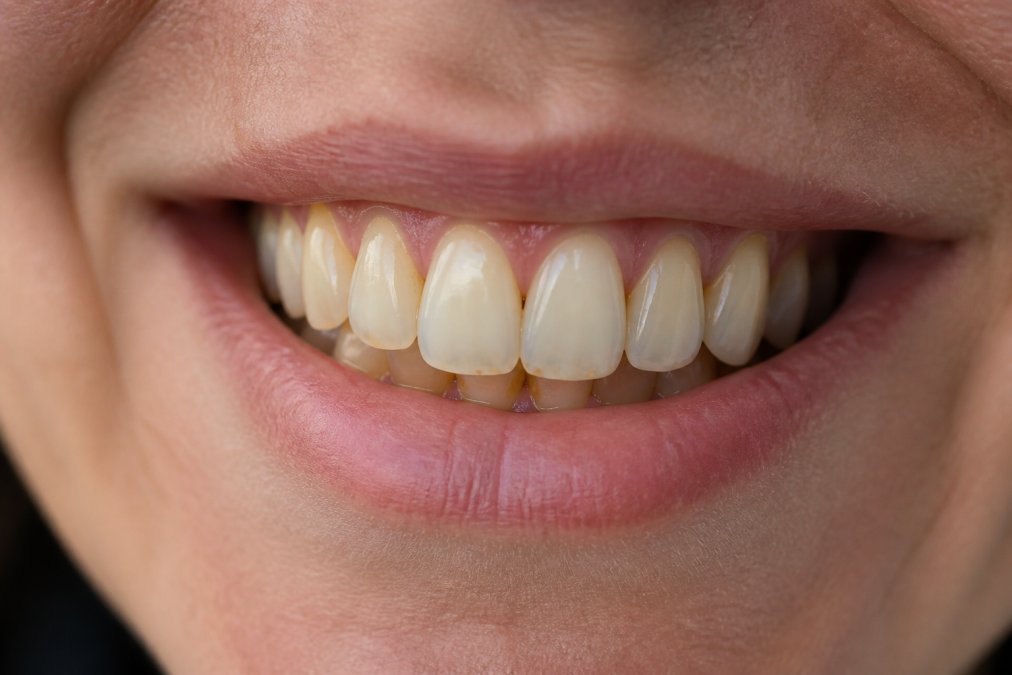
Visual changes are equally important to recognize. You may notice your teeth appear more yellow as the protective enamel layer thins and reveals the darker dentin beneath. The edges of your front teeth may look translucent or slightly beveled rather than sharp. Some people experience increased surface roughness or visible pitting on their enamel.
Gum recession often accompanies enamel erosion, exposing the root surface and creating additional sensitivity. If you're experiencing multiple symptoms, sensitivity combined with visible discoloration, roughness, or gum changes, the erosion has likely progressed beyond early stages. This is the point where consulting an enamel repair professional becomes important, not optional.
Natural Approaches to Enamel Repair: What Works and What Doesn't
Remineralization at Home
Remineralization restores mineral content to weakened enamel, different from regenerating new enamel. Your body cannot grow new enamel tissue, but it can deposit minerals back into existing structure, reversing early erosion.
Home remineralization works best in early erosion when enamel structure remains mostly intact. Your saliva naturally contains calcium and phosphate ions; remineralizing products increase the concentration available for deposition into enamel tubules.
Meaningful remineralization requires consistent daily use over 4-8 weeks before reduced sensitivity appears. Mineral deposition happens gradually; many people abandon the approach prematurely expecting faster results.
Nano-Hydroxyapatite Toothpaste Benefits for Daily Use
Nano-hydroxyapatite (nHa) resembles the mineral in teeth and is studied for mineral deposition and sensitivity management. Particle size and shape matter to formulation design and can influence interactions with tooth surfaces. However, a stated particle size alone does not establish how deeply a product acts or prove that larger particles provide no benefit.
Concentration is one relevant factor, not a universal pass-or-fail rule. Ten percent should not be described as the minimum threshold for measurable remineralization. Lower concentrations may also offer benefits; comparisons need evidence for the specific formulations and outcomes measured.
Aftology's 10% Nano-Hydroxyapatite Toothpaste uses 20 nm hydroxyapatite rods as a deliberate formulation choice. Particle size, shape, concentration, dispersion, and the complete formula should be considered together. These specifications alone do not guarantee superiority over another finished product or a particular result for every person.

Both fluoride and hydroxyapatite approaches can support remineralization, with different mechanisms and evidence. Neither can restore tooth structure that is already missing. Ask your dentist which routine fits your erosion, sensitivity, and cavity risk rather than assuming one ingredient is universally better.
Popular "Natural" Products That Actually Harm Enamel
While the desire to use natural products is understandable, several popular home remedies actively damage enamel through chemical erosion. Understanding the chemistry behind these failures prevents costly mistakes.
Activated Charcoal: Charcoal toothpastes are highly abrasive (RDA often exceeding 70) and mildly acidic (pH 3.5-4.5), creating dual erosion through mechanical abrasion and chemical erosion. Studies show measurable enamel loss within weeks. Particles are too large to penetrate enamel tubules; perceived whitening comes from surface removal, sanding away enamel.
Baking Soda: Baking soda is abrasive (RDA 60-70) and raises mouth pH from 6.5-7.5 to 8.0-8.5, destabilizing the mineral equilibrium that prevents demineralization. It lacks calcium and phosphate needed for remineralization, merely removing surface stains through abrasion and leaving enamel thinner and more porous.
Oil Pulling: Oil pulling has no scientific evidence supporting enamel repair. Oils are hydrophobic and cannot penetrate hydrophilic enamel. While not directly harmful, it delays proper treatment and people often discover advanced damage only when sensitivity becomes severe.
Lemon Juice and Vinegar: These are among the most damaging substances for enamel. Lemon juice (pH 2.0-2.6) and vinegar (pH 2.4-3.3) cause immediate, irreversible erosion since enamel demineralizes at pH 5.5. A single rinse removes measurable enamel. People using these for "natural whitening" often experience severe erosion within months; the damage is permanent.
Sea Salt and Himalayan Salt Scrubs: Salt-based pastes combine high RDA scores (often 80+) with osmotic stress that draws water from enamel cells, causing micro-fractures and pathways for acid penetration. Abrasive particles simultaneously remove surface enamel, compounding damage.
These products rely on abrasion (mechanical removal) rather than remineralization (chemical restoration). Abrasion always results in net enamel loss. True enamel repair requires mineral deposition, not particle removal.
Nano-Hydroxyapatite Toothpaste →
Professional Fluoride Varnish vs Toothpaste: Clinical Evidence
Professional fluoride varnish applies concentrated fluoride directly to tooth surfaces, delivering much higher concentration than toothpaste and providing protective benefits for months through prolonged enamel contact.
Toothpaste contains 1,000-1,500 ppm fluoride with 2-3 minutes contact time; professional varnish contains 22,600 ppm with hours of contact. This intensity difference produces measurable differences in cavity prevention and enamel strengthening.
Fluoride works through remineralization as well, but through a different mechanism than hydroxyapatite. It replaces hydroxyl ions in the enamel crystal structure, creating fluorapatite, which is more acid-resistant than natural hydroxyapatite. This makes fluoride particularly effective at preventing new decay.
Fluoride doesn't address existing erosion as effectively as nHa. With significant enamel loss and exposed dentin, fluoride varnish protects against further decay but won't rebuild missing structure. Professional treatments work best combined with daily home remineralization.
When to Choose Professional Dental Treatments Over Home Care
The decision to pursue treatment from an enamel repair professional depends on three factors: erosion severity, duration of home care attempts, and whether structural loss has occurred. Understanding the distinction between remineralization (reversible) and restoration (permanent) is critical.
Assessing Erosion Severity: The Decision Framework
Early-stage erosion (mild sensitivity, no visible damage, slight translucency at edges) responds well to home remineralization. If you've used a quality product consistently for 6-8 weeks and notice reduced sensitivity, continue home care.
Moderate erosion (visible yellowing, roughness, sensitivity to multiple triggers, slight dentin exposure) requires professional fluoride varnish combined with daily home remineralization. Timeline: 8-12 weeks typically produces noticeable improvement.
Severe erosion (significant dentin exposure, visible pitting or beveling, widespread discoloration, multiple affected teeth) cannot be reversed through remineralization alone. Professional restoration becomes necessary.
Professional Treatment Options and Long-Term Success Rates
Dental Bonding: Tooth-colored composite resin is applied to damaged surfaces and hardened with light, restoring appearance and protecting exposed dentin. Best for localized erosion on 1-3 teeth; limitation is that composite wears faster than natural enamel.
Porcelain Veneers: Thin ceramic shells bonded to front tooth surfaces. Best for extensive erosion affecting multiple front teeth; limitation is permanent removal of 0.5-1mm of tooth structure.
Full Crowns: Metal-ceramic or all-ceramic crowns encase the entire tooth.
The Critical Timeline: When Home Care Has Failed
If you've used a clinically effective remineralizing product consistently for 8 weeks with no improvement, professional evaluation is necessary. This indicates either erosion is too advanced for remineralization alone, the underlying cause hasn't been addressed (dietary acid, reflux, abrasive brushing), or individual factors limit remineralization response (lower saliva pH, reduced salivary flow).
Combining Professional Treatment with Home Care for Long-Term Success
Professional restorations address structural loss but are not permanent: bonding lasts 5-10 years; veneers last 10-15 years; crowns last 15-20 years. After restoration, continued home remineralization prevents erosion of remaining enamel and protects restoration margins.
Cost-Benefit Analysis: Home Remineralization vs Professional Intervention
Aftology's 10% Nano-Hydroxyapatite Toothpaste costs $15.99. This approach has minimal financial risk for mild to moderate erosion.
Professional treatments carry substantially higher costs.
Long-Term Success: Combining Natural and Professional Approaches
The most reliable path to enamel health combines natural and professional methods. Professional treatments provide immediate protection and restoration; home remineralization offers sustained prevention and gradual repair.
| Approach | Timeline | Cost | Best For | Limitations |
|---|---|---|---|---|
| Home remineralization (nHa toothpaste) | 4-12 weeks | $15-20/month | Early erosion, sensitivity prevention | Cannot restore lost structure |
| Professional fluoride varnish | Immediate protection | $30-50/visit | Protection of remaining enamel | Doesn't rebuild eroded areas |
| Dental bonding | Same visit | $200-400/tooth | Cosmetic restoration, localized damage | May need replacement in 5-10 years |
| Veneers/crowns | 2-3 visits | $800-3,000/tooth | Extensive erosion, multiple teeth | Permanent tooth structure removal |
| Combined approach | 8+ weeks ongoing | $200-300 initial + $20/month | Moderate to severe erosion | Requires consistency and patience |
Frequently Asked Questions
Can enamel be naturally repaired or regrown?
Tooth enamel cannot regrow, but it can remineralize. The mineral structure of enamel can be rebuilt through remineralization when exposed to the right minerals, primarily calcium and phosphate. Natural approaches like nano-hydroxyapatite toothpaste work by supplying these minerals to repair microscopic damage. However, remineralization only works on early-stage erosion; severe enamel loss requires professional restorative procedures like bonding or crowns.
How does nano-hydroxyapatite compare to professional fluoride treatments?
Nano-hydroxyapatite and fluoride both remineralize enamel but work differently. Fluoride strengthens enamel by forming fluorapatite, a harder mineral layer. Nano-hydroxyapatite directly replaces lost mineral structure with the same compound your teeth are made of. Research shows both are effective; the choice depends on sensitivity levels, personal preference, and whether you want a fluoride-free option. Professional fluoride varnish delivers higher concentrations in a single application, while daily nano-hydroxyapatite toothpaste provides consistent, ongoing support.
What are the limitations of natural enamel repair methods?
Natural enamel repair methods work only on early demineralization and surface erosion. They cannot reverse advanced enamel loss, fill cavities, or address dentin exposure from severe erosion. Home remineralization also takes weeks to months to show results and requires consistent daily use. If enamel has worn through to the dentin layer, causing significant sensitivity or structural damage, professional treatments become necessary because natural methods cannot restore that depth of loss.
When is professional dental intervention necessary for enamel loss?
Seek professional treatment if you experience severe tooth sensitivity unrelieved by remineralizing toothpaste after 4-6 weeks, visible pitting or cupping in the enamel surface, yellow discoloration from dentin exposure, or sharp pain when chewing. Professional options include dental bonding to cover exposed dentin, porcelain veneers for cosmetic and protective restoration, or crowns for heavily compromised teeth. A dental checkup can determine whether your erosion is reversible through home care or requires restorative procedures.