

Table of Contents
- What Is Liposomal Magnesium Cream and How Does It Work
- Why Liposomal Delivery Matters for Magnesium Absorption
- Magnesium Cream for Muscle Cramps and Recovery
- Sleep Support, Stress Reduction, and Relaxation Benefits
- How to Use Topical Magnesium Cream Effectively
- Side Effects of Topical Magnesium and Safety Considerations
- Skin Health and Deep Penetration Benefits
- Scientific Consensus Versus Marketing Claims
Last Updated: August 16, 2026
What Is Liposomal Magnesium Cream and How Does It Work
Liposomal magnesium cream encapsulates magnesium within microscopic lipid spheres designed to penetrate the skin barrier and deliver the mineral directly to muscle and tissue. Unlike conventional magnesium creams that sit on the surface, liposomal delivery systems use a phospholipid bilayer structure to protect the magnesium molecule and facilitate transdermal absorption at the cellular level.

At Aftology, we've engineered our liposomal magnesium cream using proprietary fermentation and enzyme bio-extraction technology to maximize bioavailability and ensure sustained mineral release. Most topical magnesium products fail to achieve meaningful serum magnesium elevation because skin is a barrier by design. Liposomal encapsulation solves this by mimicking cell membrane structure, allowing magnesium to pass through dermal layers rather than accumulating on the surface.
Liposomal delivery systems explained
A liposomal delivery system wraps active ingredients in a protective shell made of phospholipids, the same molecules that form cell membranes. This encapsulation protects magnesium from degradation and enables cellular uptake by allowing the liposome to fuse with skin cells.
When applied, liposomes penetrate the stratum corneum and travel into the epidermis and dermis. Once they reach target tissue, the phospholipid bilayer releases magnesium directly into cells for muscle relaxation, stress reduction, and recovery support. This differs fundamentally from ionic magnesium salts, which are hydrophilic and cannot easily cross the lipid-based skin barrier. Standard magnesium lotions provide temporary surface hydration but won't achieve deep penetration or meaningful systemic delivery.
Transdermal absorption versus oral supplements
Transdermal absorption offers distinct advantages over oral supplementation, particularly for those with gastrointestinal sensitivity or seeking localized muscle support. Oral magnesium must survive stomach acid, pass through the intestinal wall, and navigate hepatic metabolism before reaching systemic circulation, resulting in variable bioavailability and common GI side effects including cramping and loose stools.
Topical magnesium cream bypasses the digestive system entirely, absorbing directly through skin and avoiding first-pass metabolism. For athletes and individuals with fatigued muscles or nocturnal leg spasms, this localized delivery provides targeted relief without systemic effects.
Historically, transdermal magnesium delivery faced credibility gaps, with many practitioners skeptical that magnesium could achieve meaningful serum elevation through skin. This skepticism has merit for conventional topical products, but liposomal systems operate under different pharmacokinetics. The phospholipid encapsulation fundamentally changes how magnesium crosses the dermal barrier and enters systemic circulation.
Why Liposomal Delivery Matters for Magnesium Absorption
The critical difference between liposomal and conventional magnesium delivery comes down to bioavailability. Standard magnesium creams rely on passive diffusion, which is inefficient across the lipid-based skin barrier. Liposomal systems use active cellular mechanisms to achieve superior absorption rates.
When magnesium is encapsulated in liposomes, it gains access to cellular uptake pathways that non-encapsulated minerals cannot use. The phospholipid structure mimics natural cell membranes, allowing the liposome to fuse directly with skin cells and deposit magnesium intracellularly through endocytosis. A liposomal magnesium cream can deliver 2-5x better absorption compared to standard topical formulations, a direct consequence of how molecular encapsulation interacts with cellular biology.
This matters because magnesium deficiency affects an estimated 45-60% of the population, yet oral supplementation triggers gastrointestinal side effects in many people. Liposomal transdermal delivery offers an alternative pathway that bypasses these obstacles while maintaining meaningful systemic absorption. Aftology's patent-pending gel matrix technology enhances this effect by optimizing the liposomal suspension and ensuring sustained mineral release over several hours, maintaining elevated magnesium availability in target tissues rather than producing brief spikes.
Magnesium Cream for Muscle Cramps and Recovery
Muscle cramps occur when magnesium-dependent cellular processes fail to regulate muscle contraction properly. Magnesium acts as a natural calcium antagonist, preventing excessive calcium influx that triggers involuntary contractions. When magnesium status drops, calcium overwhelms the regulatory system, and cramps result.
Topical magnesium cream addresses this directly by increasing magnesium availability in muscle tissue. For individuals experiencing nocturnal leg spasms or exercise-induced cramping, localized application provides targeted support without systemic side effects. Post-workout muscle recovery depends on magnesium for reducing inflammation, facilitating ATP production, and supporting protein synthesis. Athletes applying liposomal magnesium cream after training may experience faster recovery, reduced delayed-onset muscle soreness (DOMS), and improved subsequent performance because the magnesium reaches the exact tissue experiencing metabolic stress.

The advantage over oral supplementation becomes apparent during intense training phases. Topical application delivers magnesium directly to fatigued muscle within minutes, whereas oral supplementation requires waiting for GI absorption and systemic distribution. Aftology's liposomal magnesium cream provides sustained magnesium availability, supporting the critical recovery window when inflammation reduction and ATP replenishment matter most.
Sleep Support, Stress Reduction, and Relaxation Benefits
Magnesium is the body's primary mineral for nervous system regulation. It activates the parasympathetic nervous system while blocking stress-induced calcium influx that keeps neurons firing. When magnesium status is adequate, your nervous system can downregulate cortisol production and shift into relaxation mode.
Topical magnesium cream supports this process by increasing magnesium availability to the central and peripheral nervous systems. Applied in the evening, it signals your body that stress is ending and sleep is approaching. Unlike oral magnesium supplements, which can trigger loose stools that disrupt sleep, topical application provides clean delivery without digestive disturbance.
Magnesium reduces muscle tension throughout the body and reduces inflammation at the cellular level, creating a compound relaxation effect. Sleep hygiene protocols that include topical magnesium cream may show improvements in sleep latency and sleep quality because magnesium addresses multiple sleep-disrupting mechanisms: it reduces cortisol, relaxes muscles, and stabilizes nervous system activity. A single application provides sustained support, covering the critical pre-sleep window and early sleep phases.
How to Use Topical Magnesium Cream Effectively
Effective topical magnesium application requires understanding both the application protocol and timing windows that maximize absorption and systemic benefit.
Application protocol and timing
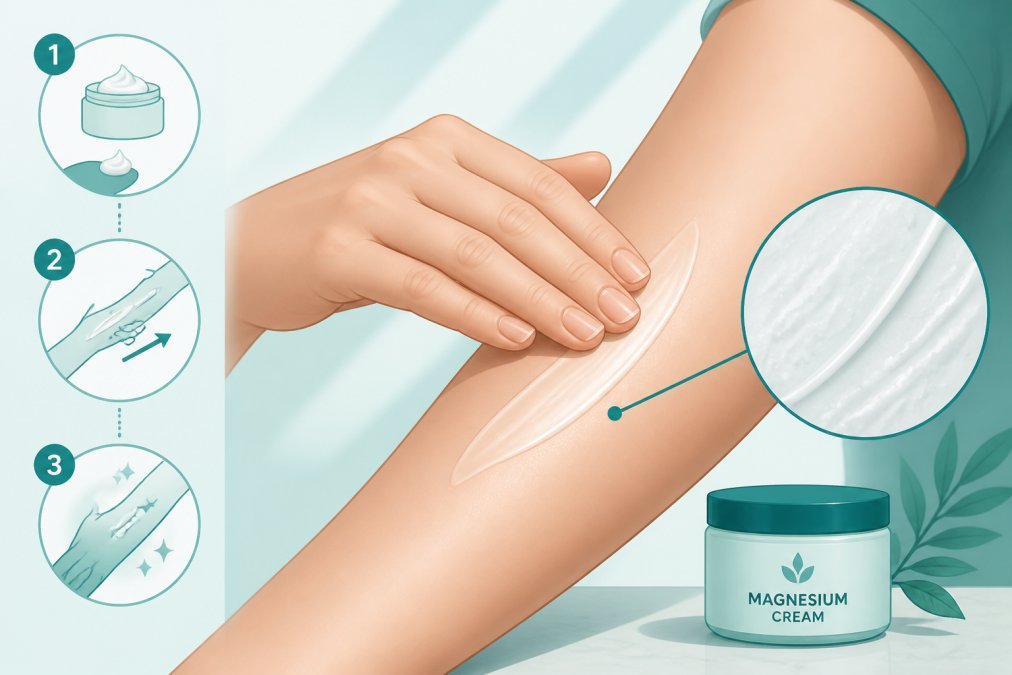
Apply magnesium cream to clean, dry skin using gentle circular motions. Use approximately a quarter-sized amount per application area (forearm, calf, shoulder, or lower back). Massage the cream into the skin for 30-60 seconds to ensure full contact with the dermal layer and facilitate liposomal penetration.
Timing matters significantly. Apply magnesium cream 30-60 minutes before the benefit you're seeking. For sleep support, apply 60 minutes before bedtime to allow absorption and nervous system signaling to occur before sleep. For post-workout recovery, apply immediately after training when muscle tissue is most metabolically active and receptive to magnesium uptake.
Avoid applying to broken, irritated, or freshly sunburned skin. The cream should absorb completely within 5-10 minutes, leaving no greasy residue. If you're experiencing sticky residue, you've likely applied too much product.
Shop Liposomal Magnesium Cream →
Dosage and frequency guidelines
Most individuals benefit from one application per day, typically in the evening for sleep and relaxation support or immediately post-workout for recovery. Some athletes or individuals with severe muscle cramps use twice-daily applications without issue.
Consistency matters more than quantity. A single application provides sustained magnesium availability. Nightly application may produce cumulative nervous system benefits over 2-4 weeks as magnesium status stabilizes. A quarter-sized amount covers a forearm or calf adequately. For larger areas, use two applications on different areas rather than doubling the amount in one location.
Most people may notice improved sleep quality within 3-5 days and reduced muscle cramps within 1-2 weeks. If you're not experiencing noticeable benefits after 3 weeks of consistent nightly application, your magnesium deficiency may warrant oral supplementation in addition to topical application.
Side Effects of Topical Magnesium and Safety Considerations
Topical magnesium is exceptionally safe because it bypasses the gastrointestinal system entirely. You won't experience the loose stools, cramping, or digestive discomfort common with oral magnesium supplements. Localized skin reactions are possible in a small percentage of users.
Mild skin irritation, redness, or temporary itching occurs in approximately 2-3% of users, typically within the first few applications, and usually resolves within 24 hours. If irritation persists beyond 48 hours, discontinue use and consult a dermatologist.
Some individuals report a mild warming or tingling sensation during the first application, a sensory response to increased blood flow and magnesium uptake, not a sign of damage. The sensation typically diminishes with repeated use.
Do not apply magnesium cream to open wounds, severe burns, or areas with active dermatological conditions without consulting a healthcare provider first. If you are taking medications that interact with magnesium (certain antibiotics, bisphosphonates, or calcium channel blockers), consult your physician before using topical magnesium. Pregnant individuals should consult their OB/GYN before introducing new products.
Skin Health and Deep Penetration Benefits
Beyond muscle and nervous system support, magnesium plays a critical role in skin barrier function and cellular regeneration. The skin barrier relies on magnesium-dependent processes to maintain hydration and structural integrity. When magnesium status is low, the skin barrier becomes compromised, leading to transepidermal water loss and increased sensitivity.
Topical magnesium cream directly supports skin barrier repair by providing magnesium where it's needed most. The liposomal delivery system ensures deep skin penetration, reaching the living epidermis where cellular regeneration occurs. Magnesium reduces inflammation at the cellular level by stabilizing mast cells and reducing pro-inflammatory cytokine production, which is why individuals with sensitive, reactive, or inflamed skin often experience noticeable improvement within days.
Aftology's proprietary formulation combines magnesium with botanical extracts that amplify skin barrier support and provide additional anti-inflammatory benefits. Sustained mineral release ensures your skin receives continuous magnesium support throughout the day and night, allowing skin cells to complete repair cycles. Users may notice improved skin hydration, reduced sensitivity, and a more resilient complexion within 2-3 weeks of consistent application.
Scientific Consensus Versus Marketing Claims
The magnesium supplement market is saturated with exaggerated claims. The scientific consensus on magnesium is clear: the mineral is essential for hundreds of enzymatic processes, and magnesium deficiency impairs muscle function, nervous system regulation, and sleep quality. However, evidence for specific magnesium products, particularly topical formulations, is thinner than marketing materials suggest.
Liposomal delivery distinguishes itself from the noise because liposomal encapsulation is grounded in established pharmaceutical science. Liposomal drug delivery has been used in clinical medicine for decades. The technology works at the cellular level, and the physics of how phospholipid bilayers interact with cell membranes is well-understood.
What remains less certain is whether liposomal magnesium cream achieves clinically meaningful serum magnesium elevation in most users. Some individuals, particularly those with severe magnesium deficiency, likely benefit significantly. Others with adequate magnesium status may experience localized muscle relaxation and skin benefits without systemic effects.
Aftology's approach is to formulate to research standards rather than minimum effective doses. We don't claim that topical magnesium replaces oral supplementation for severe deficiency, but we deliver a product that functions as designed: it penetrates the skin, delivers magnesium to target tissues, and supports muscle recovery, sleep, and skin health. Liposomal magnesium cream is a targeted tool for localized muscle support, sleep hygiene, and skin barrier health, not a cure-all.
Topical magnesium works best when integrated into a broader wellness protocol that includes adequate sleep, stress management, and consistent movement. Aftology's liposomal magnesium cream delivers magnesium directly to muscle and skin tissue with 2-5x better absorption than standard topical formulations, thanks to our patent-pending gel matrix and proprietary fermentation technology. Get started with Aftology's liposomal magnesium cream and experience deep skin penetration, sustained mineral release, and the muscle recovery support that research-standard formulations provide.
Frequently Asked Questions
How does liposomal delivery improve magnesium absorption compared to regular topical magnesium?
Liposomal encapsulation wraps magnesium in phospholipid bilayers that mimic your body's cellular structure. This allows the mineral to penetrate deeper into skin layers and cross cellular membranes more efficiently than standard creams. The result is significantly higher bioavailability and faster cellular uptake, meaning your muscles and tissues access the magnesium more effectively for recovery and relaxation.
Where is the best place to apply magnesium cream for muscle cramps and recovery?
Apply liposomal magnesium cream directly to areas experiencing muscle tension or cramps, typically the calves, thighs, shoulders, or lower back. These locations have good blood flow and thin skin, which enhances transdermal absorption. For systemic benefits like sleep support and stress reduction, apply to the inner forearms or behind the ears. Massage gently for 1-2 minutes to boost circulation and facilitate deeper skin penetration.
Is it safe to use magnesium cream every day?
Yes, topical magnesium is generally safe for daily use since it bypasses gastrointestinal side effects associated with oral supplements. Unlike oral magnesium, which can cause loose stools or digestive discomfort, transdermal application avoids these issues. Most people can apply liposomal magnesium cream once or twice daily without concern. If you have sensitive skin or notice irritation, reduce frequency or patch-test on a small area first.
Can topical magnesium help with sleep and anxiety?
Yes. Magnesium regulates cortisol and supports nervous system relaxation, which improves sleep hygiene and reduces anxiety symptoms. Topical application allows the mineral to reach systemic circulation through deep skin penetration, supporting whole-body wellness. Apply liposomal magnesium cream to your forearms or behind your ears 30-60 minutes before bed to optimize sleep support. Many users report better sleep quality and reduced nighttime leg spasms within one to two weeks of consistent use.
This article was written using GrandRanker