

Table of Contents
- What Fluoride-Free Toothpaste Is and Why People Choose It
- How Fluoride Prevents Cavities and Why Some Avoid It
- Toothpaste for Sensitive Teeth Without Fluoride: What Actually Works
- Does Fluoride-Free Toothpaste Cause Sensitivity?
- Fluoride-Free Toothpaste Cavity Protection: What the Evidence Shows
- Nano-Hydroxyapatite Toothpaste for Sensitive Teeth: A Research-Backed Alternative
-
How to Choose and Use Fluoride-Free Sensitivity Toothpaste Effectively
- Step 1: Evaluate the Active Sensitivity Ingredients
- Step 2: Check Abrasiveness and Gentleness
- Step 3: Read the Label for Fluoride Alternatives
- Step 4: Use the Toothpaste Correctly for Best Results
- Step 5: Track Results and Timeline
- Step 6: Troubleshooting Common Issues
- Practical Comparison: What to Look For
- When to Switch Products
- When to See a Dentist About Tooth Sensitivity
- Frequently Asked Questions
Last Updated: October 10, 2026
What Fluoride-Free Toothpaste Is and Why People Choose It
Fluoride-free toothpaste sensitive teeth formulations are made without sodium fluoride or other fluoride compounds. People choose it for concerns about fluoride intake, sensitivity to fluoride products, or preference for naturally derived ingredients. For sensitive teeth, fluoride-free products with potassium nitrate or nano-hydroxyapatite can provide relief without the irritation some experience from fluoride formulas.
How Fluoride Prevents Cavities and Why Some Avoid It
Fluoride strengthens enamel by forming fluorapatite, a harder, acid-resistant mineral, and has been the gold standard for cavity prevention for over 70 years. Some people avoid it due to concerns about systemic exposure, especially with young children, or because fluoride products irritate their gums or worsen sensitivity. Fluoride-free formulations can deliver meaningful cavity protection and sensitivity relief through other mechanisms, though with important caveats.
Toothpaste for Sensitive Teeth Without Fluoride: What Actually Works
Different sensitivity toothpastes use different ingredients and approaches. Read the complete formula and product directions rather than assuming a combination of ingredients guarantees better results.
Nano-Hydroxyapatite: Enamel Remineralization Without Fluoride
An ingredient safety assessment applies to the specific materials and conditions evaluated. It should not be presented as blanket clearance for every nano-hydroxyapatite toothpaste or as proof of a finished product’s effectiveness.
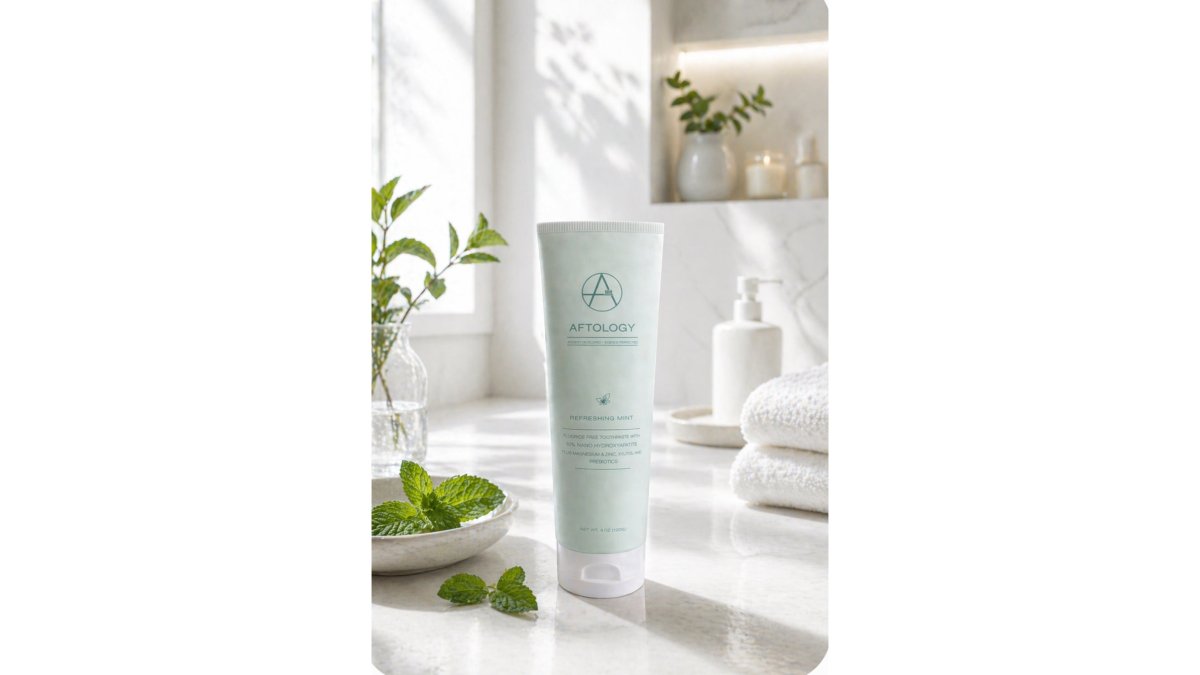
Concentration and particle size are formulation considerations, not guarantees of better results. Higher concentrations and smaller particles should not automatically be described as more effective without evidence comparing the finished products. Explore Aftology’s 10% nano-hydroxyapatite toothpaste and follow its current product directions.

Potassium Nitrate and Other Sensitivity-Relief Ingredients
Potassium nitrate appears in some sensitivity toothpastes. Check each product’s label for its ingredients and directions. Results vary by formulation and the cause of sensitivity; no immediate relief or fixed benefit timeline is promised here. Do not infer that Aftology’s toothpaste contains potassium nitrate from this general discussion.
Does Fluoride-Free Toothpaste Cause Sensitivity?
Do not assume worsening sensitivity is a normal adjustment period. Contact your dentist if symptoms worsen, persist, or are significant, rather than continuing through a fixed toothpaste trial.
Fluoride-Free Toothpaste Cavity Protection: What the Evidence Shows
Fluoride-free toothpaste does not provide the same cavity prevention as fluoride toothpaste, which has 70+ years of clinical evidence. However, nano-hydroxyapatite provides measurable cavity protection through enamel remineralization, making enamel more resistant to acid attack, though the evidence base is smaller.
Assessing Your Cavity Risk Before Switching
Not everyone faces the same cavity risk. Before choosing a fluoride-free toothpaste, consider these factors:
High cavity risk, Stick with fluoride or consult a dentist if you have multiple cavities, consume sugary/acidic foods regularly, experience dry mouth, have gum disease, cannot brush twice daily, or have deep pits in teeth.
Mild-to-moderate cavity risk, Fluoride-free toothpaste with nano-hydroxyapatite is reasonable if you've had few cavities in 3-5 years, maintain good hygiene, limit sugar, have healthy saliva, and visit a dentist every 6 months.
Low cavity risk, You have flexibility with fluoride-free options if you've had no cavities in 5+ years, maintain excellent hygiene, have strong enamel, and avoid frequent sugary/acidic foods.
How Nano-Hydroxyapatite Protects Against Cavities
Cavities form when acid-producing bacteria attack enamel. Fluoride forms fluorapatite, a harder mineral that resists acid. Nano-hydroxyapatite works through remineralization: it fills microscopic gaps and rebuilds mineral density, making enamel more resistant to acid attack. Research shows measurable enamel strengthening, though protection is generally less robust than fluoride in high-risk populations.
Building a Fluoride-Free Cavity-Prevention Strategy
Cavity protection with fluoride-free toothpaste requires twice-daily brushing with nano-hydroxyapatite, daily flossing, limited sugar and acidic foods, professional cleanings every 6 months, and optional fluoride rinse for moderate-to-high risk.
When to Consult a Dentist Before Switching
Schedule a dental visit before switching if you have a cavity history, gum recession, dry mouth, enamel erosion, are pregnant or have young children, or haven't seen a dentist in over a year. A dentist can assess your risk and recommend whether fluoride-free toothpaste is appropriate.
The Practical Reality
For people with mild-to-moderate cavity risk and significant sensitivity issues, fluoride-free toothpaste sensitive teeth products with nano-hydroxyapatite can be a reasonable choice. For people with high cavity risk, fluoride toothpaste remains the stronger option, but a fluoride rinse used alongside a fluoride-free sensitivity toothpaste can provide a middle ground. The key is matching your toothpaste choice to your actual risk profile, not just your preference for fluoride-free products.
Nano-Hydroxyapatite Toothpaste for Sensitive Teeth: A Research-Backed Alternative
Aftology’s toothpaste contains 10% nano-hydroxyapatite. Check the current product information for the full ingredient list and directions. We do not claim it contains potassium nitrate.
Concentration and particle size are formulation considerations, not guarantees of better results. Higher concentrations and smaller particles should not automatically be described as more effective without evidence comparing the finished products.
Results vary by formulation and the cause of sensitivity. No specific relief timeline is promised. Toothpaste is not a substitute for diagnosing cavities, cracks, gum disease, or other causes of pain.
How to Choose and Use Fluoride-Free Sensitivity Toothpaste Effectively
Choosing the right fluoride-free sensitivity toothpaste requires looking beyond the label. Here's how to evaluate options and use them correctly for measurable results.
Step 1: Evaluate the Active Sensitivity Ingredients
Read the full ingredient list and the product’s directions. The presence of an ingredient alone does not guarantee that a finished formula will relieve sensitivity.
Do not treat 10% nano-hydroxyapatite as a universal minimum effectiveness threshold or assume that higher concentrations always work better. A combination with potassium nitrate should not be described as necessary or automatically superior without evidence comparing the finished products.
Nano-Hydroxyapatite Toothpaste →
Step 2: Check Abrasiveness and Gentleness
Sensitive teeth often result from enamel wear or gum recession. Using an abrasive toothpaste will worsen the problem.
Look for RDA (Relative Dentin Abrasivity) under 70. Whitening toothpastes typically have RDA 80-100 and should be avoided.
Choose SLS-free formulas. Sodium lauryl sulfate (SLS) is a harsh detergent that irritates sensitive gums. Many sensitivity-focused toothpastes are SLS-free; check the ingredient list to confirm.
Avoid whitening claims. Whitening toothpastes contain abrasive particles or bleaching agents that erode enamel and worsen sensitivity. If you want whitening, use a separate whitening product occasionally (not daily) and rely on your sensitivity toothpaste for daily use.
Step 3: Read the Label for Fluoride Alternatives
If you're choosing fluoride-free specifically, confirm the formula includes a cavity-prevention alternative.
Nano-hydroxyapatite is the most evidence-supported option for cavity protection and sensitivity relief, serving double duty: remineralizing enamel and reducing cavity risk. Arginine may help occlude tubules and reduce sensitivity, though evidence is smaller. Strontium acetate relieves sensitivity but does not provide cavity protection.
If the formula lists none of these, it offers sensitivity relief only and no meaningful cavity protection.
Step 4: Use the Toothpaste Correctly for Best Results
Formulation matters, but technique and consistency determine whether you'll see improvement.
Brush twice daily with a soft-bristled brush. Use a pea-sized amount (about the size of a pea, not a full brush head).
Use gentle, circular motions. Aggressive scrubbing or horizontal sawing motions damage enamel and gums. Let the toothpaste do the work; your technique should be gentle.
Do not rinse excessively after brushing. Rinse with a small amount of water or skip rinsing to allow active ingredients to remain on teeth longer.
Avoid eating or drinking for 30 minutes after brushing. This gives the active ingredients time to work without being washed away by food or beverages.
Do not use whitening products simultaneously. If you're treating sensitivity, avoid whitening toothpastes, strips, or trays while using your sensitivity formula.
Step 5: Track Results and Timeline
Results vary by formulation and the cause of sensitivity. No specific relief timeline is promised. Toothpaste is not a substitute for diagnosing cavities, cracks, gum disease, or other causes of pain.
Step 6: Troubleshooting Common Issues
Do not assume worsening sensitivity is a normal adjustment period. Contact your dentist if symptoms worsen, persist, or are significant, rather than continuing through a fixed toothpaste trial. Ask about irritation or returning symptoms rather than repeatedly switching products without assessment.
Practical Comparison: What to Look For
| Criterion | What to Look For | Why It Matters |
|---|---|---|
| Active sensitivity ingredient | Full ingredient list and product directions | Ingredient presence or concentration alone does not guarantee relief |
| Abrasiveness level | RDA under 70 (ideally under 60) | High abrasiveness worsens sensitivity and enamel wear |
| Detergent type | SLS-free formula | SLS irritates sensitive gums |
| Fluoride alternative | Nano-hydroxyapatite or arginine | Provides cavity protection without fluoride |
| Whitening claims | None (avoid whitening formulas) | Whitening agents erode enamel and worsen sensitivity |
| Ingredient transparency | Concentrations listed or available from manufacturer | Allows you to check formulation details, not assume effectiveness |
When to Switch Products
If symptoms persist or worsen, ask your dentist about the cause and suitable product choices rather than completing a fixed trial and repeatedly switching formulas.
When to See a Dentist About Tooth Sensitivity
Contact your dentist if symptoms worsen, persist, or are significant, rather than continuing through a fixed toothpaste trial. Seek assessment if pain limits eating or drinking, affects only one tooth, appeared suddenly after dental work, or is accompanied by visible gum recession or bleeding. Toothpaste is not a substitute for diagnosing cavities, cracks, gum disease, or other causes of pain.
Aftology’s 10% nano-hydroxyapatite toothpaste contains 10% nano-hydroxyapatite. Check the current product information for the full ingredient list and directions. We do not claim it contains potassium nitrate.
Frequently Asked Questions
Can fluoride-free toothpaste make your teeth sensitive?
Do not assume worsening sensitivity is a normal adjustment period. Contact your dentist if symptoms worsen, persist, or are significant, rather than continuing through a fixed toothpaste trial. A fluoride-free label alone does not establish how you will respond to a formula.
Does fluoride-free toothpaste protect against cavities?
Fluoride-free toothpaste can support cavity prevention through mechanical cleaning and plaque removal, but it lacks fluoride's direct remineralization benefit. Nano-hydroxyapatite offers an alternative approach by supplying the mineral your enamel is made of, supporting remineralization at the surface. However, the cavity-prevention strategy differs: fluoride strengthens enamel through chemical bonding, while nano-hydroxyapatite works through mineral replacement. Your overall oral hygiene, diet, and dental visits remain critical regardless of toothpaste type.
What ingredients in toothpaste help with sensitive teeth?
Potassium nitrate is the most widely used sensitivity-relief ingredient; it works by desensitizing nerve pathways in exposed dentin. Nano-hydroxyapatite addresses sensitivity by remineralizing enamel and sealing exposed tubules, reducing fluid movement that triggers pain. Strontium acetate is another option that blocks dentin tubules. The most effective approach combines mechanical cleaning with one of these active ingredients and avoids harsh abrasives that can worsen sensitivity over time.
When should you see a dentist about tooth sensitivity?
Seek dental advice for persistent, worsening, or significant sensitivity, pain affecting only one tooth, swelling, or visible damage. Toothpaste is not a substitute for diagnosing cavities, cracks, gum disease, or other causes of pain. Do not delay assessment through a fixed toothpaste trial.