

Table of Contents
- Why Are My Teeth Sensitive to Cold Air
- Enamel Wear, Recession, and Root Exposure
- Remineralization and Its Limits
- Choosing Toothpaste for Sensitive Teeth
- How Long Does Sensitivity Last?
- Reducing Immediate Triggers
- When to See a Dentist
- Frequently Asked Questions
Last Updated: October 6, 2026
Why Are My Teeth Sensitive to Cold Air
Cold air can provoke a sharp sensation in sensitive teeth. Exposed dentin is one possible explanation, but decay, cracks, gum problems, or other conditions may also cause pain. The trigger alone does not establish a diagnosis.
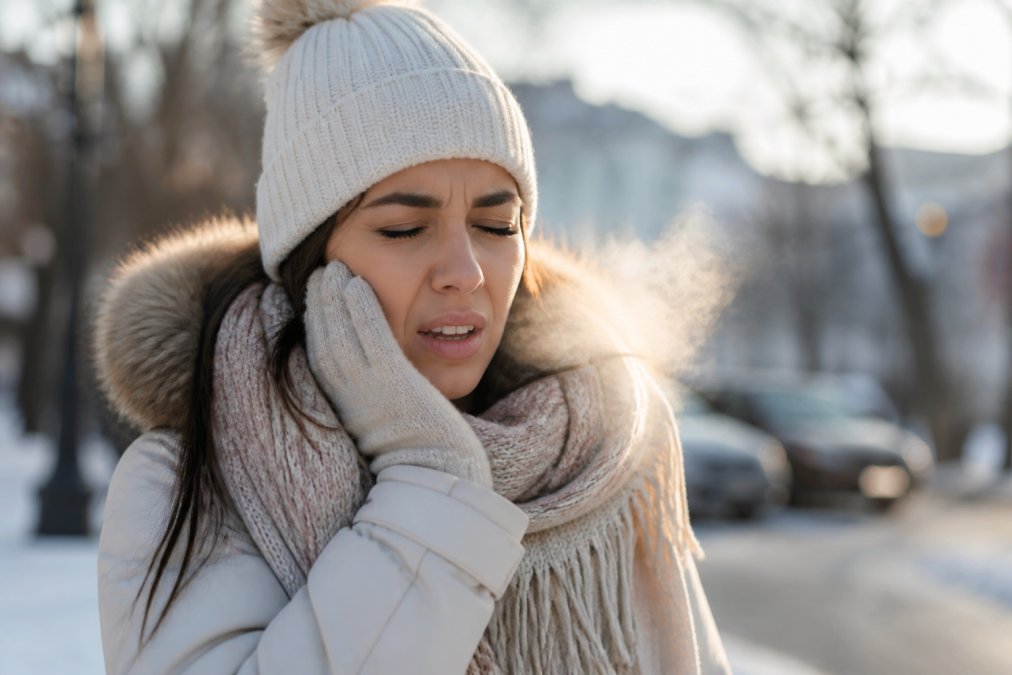
This guide discusses possible mechanisms, practical care, and when symptoms need professional assessment rather than promising a quick fix.
Dentin Tubules and Sensitivity
Dentin contains microscopic tubules. Fluid movement within exposed tubules can stimulate nerves and cause brief pain. Tubules are in dentin, not enamel; sensitivity does not necessarily mean the nerve itself is exposed.
Cold Air and Cold Drinks
Airflow and evaporation may provoke sensitivity in exposed dentin, as can cold liquids. One is not necessarily more painful or faster-cooling for everyone. Describe your own triggers and whether pain lingers to your dentist.
Enamel Wear, Recession, and Root Exposure
Enamel loss and recession may expose sensitive areas, but they have different causes and need assessment. Toothpaste cannot regrow missing enamel or gum tissue. Reduced pain alone does not prove structural damage has reversed.
Other Possible Causes
A cavity, crack, damaged tooth, or restoration problem can also cause cold sensitivity. Do not assume symptoms are simply wear that can be managed with toothpaste.
Remineralization and Its Limits
Remineralization supports mineral recovery in early demineralized areas where tooth structure remains. It is different from replacing enamel lost through erosion or restoring a developed cavity.
Brush gently for two minutes, twice daily, clean between teeth, and limit frequent sugary drinks and repeated acidic exposures. Ask your dentist about suitable preventive products and brushing timing after reflux, vomiting, or acidic foods. No routine guarantees repair.
Choosing Toothpaste for Sensitive Teeth
When considering toothpaste for sensitive teeth, assess the complete formula and the cause of symptoms. Natural, gel, smooth, or low-foam descriptions do not establish greater gentleness or effectiveness.
Nano-hydroxyapatite may support remineralization and may help cover exposed dentin tubules, potentially helping manage sensitivity. These potential effects are not guaranteed surface rebuilding or treatment for every cause of pain.
Considering Sensitivity Ingredients
| Ingredient | Role to Consider | Important Limit |
|---|---|---|
| Nano-hydroxyapatite | May support remineralization and help cover exposed dentin tubules | Does not regrow missing enamel or guarantee lasting relief |
| Potassium nitrate | Used in some sensitivity formulas for effects on nerve response | Not universally faster or suitable for every cause of pain |
| Stannous fluoride | Used in formulas for sensitivity and cavity prevention | Performance and tolerance depend on the complete product |
| Arginine systems | Studied in some sensitivity formulations | Do not infer effectiveness or fluoride status from the ingredient alone |
Reading Product Labels
Check intended use, ingredients, age guidance, and directions. Abrasiveness depends on the complete formula and particle characteristics, not just whether it contains silica, calcium carbonate, or baking soda. SLS status is not an abrasiveness measurement, and gel texture alone does not prove longer contact or sustained release.
Fluoride supports remineralization and has established evidence for cavity prevention. Ask before replacing recommended fluoride care, especially with high cavity risk or dry mouth.
How Long Does Sensitivity Last?
There is no fixed timeline that applies to every case of tooth sensitivity. Duration depends on the cause and appropriate care. Improved comfort does not prove enamel has rebuilt.
Nano-Hydroxyapatite Toothpaste →
Do not assign guaranteed week- or month-based improvement schedules to enamel wear, recession, or post-cleaning discomfort. Persistent or worsening symptoms deserve assessment rather than waiting through a promised result window.
Reducing Immediate Triggers
Reducing direct cold-air exposure may help avoid an immediate trigger, but it does not diagnose or treat the underlying cause.
Breathing Comfortably Outdoors
If comfortable and feasible, breathing through your nose or loosely covering your mouth with a scarf may reduce direct cold airflow over teeth. Do not force a breathing pattern that makes breathing or exercise difficult. Persistent nasal obstruction or breathing concerns deserve appropriate medical advice.
Grinding and Clenching
Grinding or clenching may be relevant if you have jaw discomfort or tooth wear. This guide does not establish that cold weather reliably worsens bruxism or that it directly pushes gums away in every case. Ask your dentist about assessment and whether a night guard or another approach is appropriate.
Other Factors to Discuss
Note painful biting, ice chewing, whitening-related discomfort, brushing pressure, and repeated acidic exposures if relevant. These observations can help your dental team but should not be used to self-diagnose a crack or recession.
When to See a Dentist
Seek dental advice for persistent, sharp, localized, worsening, or lingering pain; pain that wakes you at night; bleeding or receding gums; swelling; or a visible tooth change. These symptoms may indicate a problem that home care cannot address.
Frequently Asked Questions
What can help teeth sensitive to cold?
Gentle brushing and a suitable sensitivity formula may be part of care. Hydroxyapatite may support remineralization and help cover exposed dentin tubules, but cannot treat every cause of pain. Ask your dentist about persistent symptoms and your cavity-prevention needs.
What could cause a cold-sensitive tooth without a diagnosed cavity?
Possible causes include exposed dentin, recession, a crack, or a restoration problem. A symptom alone does not establish the cause or rule out decay. A dentist can assess the tooth and recommend care.
Does cold air hurt more than cold drinks?
Either may trigger sensitivity. Airflow and evaporation may provoke pain in exposed dentin, but air is not necessarily more painful or faster-cooling for everyone. Note your triggers and whether pain lingers, and share that with your dentist.
When should I seek dental care?
Have persistent, worsening, localized, or lingering pain assessed, especially with swelling, nighttime pain, bleeding, or visible tooth changes. Do not wait through a fixed toothpaste trial when symptoms may need professional treatment.
Aftology's toothpaste contains 10% nano-hydroxyapatite and uses 20 nm rods as deliberate formulation choices. Particle size matters alongside shape, dispersion, concentration, and the complete formula, but these specifications do not guarantee superior results or gentleness for every person. Hydroxyapatite may support remineralization and may help cover exposed dentin tubules; it cannot regrow missing enamel.