

Table of Contents
- Does Sensitive Teeth Mean Enamel Erosion? The Short Answer
- Signs of Enamel Erosion You Should Not Ignore
- The Brushing Timing Myth: Why Brushing Right After Acidic Foods Makes Erosion Worse
- Dietary pH Scale Analysis: Which Foods and Drinks Actually Erode Enamel
- How to Remineralize Teeth Naturally and Slow Enamel Thinning
- Nano-Hydroxyapatite for Sensitive Teeth: How It Compares to Fluoride Treatment
- When to See a Dentist: Clinical Diagnosis and Treatment Options
- Conclusion: Sensitivity Is a Signal, Not a Diagnosis
- Frequently Asked Questions
Last Updated: October 3, 2026
Does Sensitive Teeth Mean Enamel Erosion? The Short Answer
Sensitive teeth do not automatically mean enamel erosion, but erosion is one of the most common reasons teeth become sensitive. At Aftology, we explain it this way: sensitivity is a symptom, and enamel erosion is only one of several possible causes.
Enamel erosion is the irreversible loss of the hard, mineralized outer layer of a tooth caused by acid dissolving its surface. That definition separates erosion from other forms of wear and explains why it behaves differently from a cavity or a cracked tooth.
How Enamel Erosion Exposes Dentin and Triggers Sensitivity
Enamel is the hardest tissue in the human body, but it is thin, has no living cells, and cannot repair itself once gone. Beneath it sits dentin, a softer, porous layer threaded with microscopic tubules connected to the nerve.
When enamel thins or wears through, those tubules become exposed, so temperature changes, sweet foods, and even a rush of air reach the nerve far more easily, the sensation patients describe as sensitive teeth.
Other Causes of Tooth Sensitivity That Mimic Erosion
Erosion is not the only culprit, and misreading the cause leads to the wrong fix. Gum recession exposes the root surface, which has no enamel at all, so sensitivity appears even when enamel is intact.
Acid reflux is another frequent driver, since stomach acid creates the same chemical damage as dietary acid. A cracked tooth, failing filling, or recently whitened tooth can also cause sensitivity unrelated to erosion, which is why a clinical diagnosis matters more than self-assessment.
Signs of Enamel Erosion You Should Not Ignore
The earliest signs of enamel erosion develop gradually, and most people notice the sensation before the visual change. Knowing what to look for lets you raise the issue while there is still enamel left to protect.
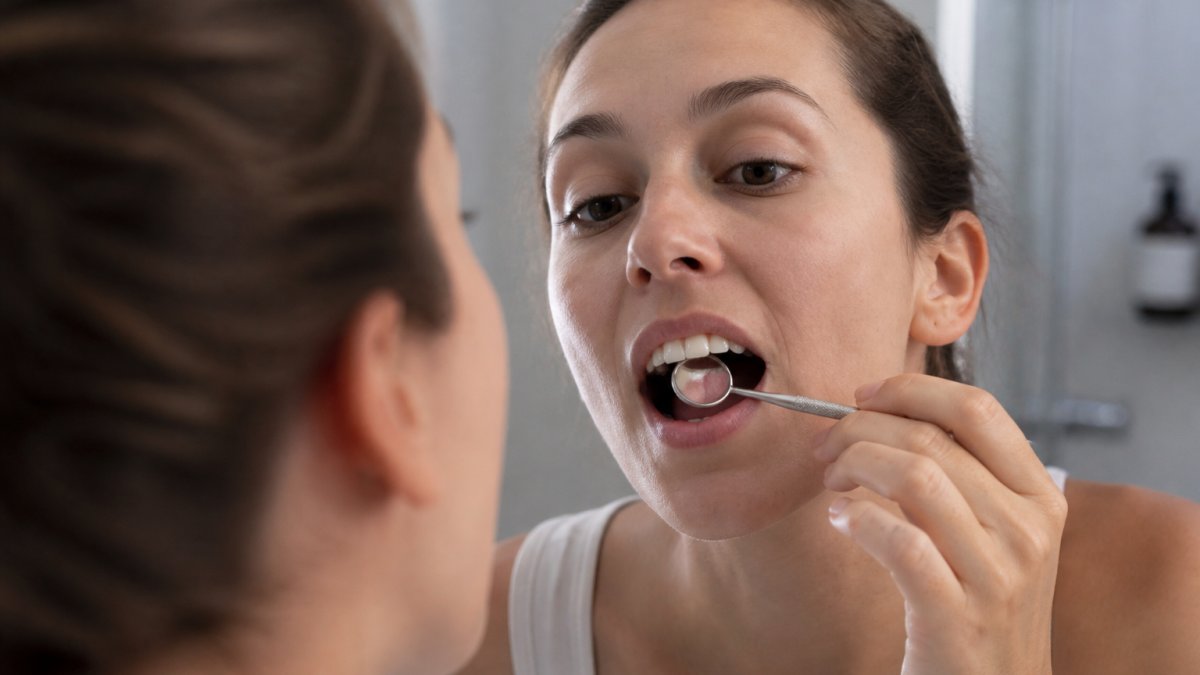
Visual Changes: Transparent Teeth and Tooth Discoloration
Two visual cues stand out, and both follow a predictable pattern based on where acid sits longest.
Transparent teeth. The biting edges of the upper front teeth are usually the first place enamel thins enough to look glassy or see-through, because the incisal edge is the thinnest part of the enamel cap.
Tooth discoloration. As the whiter, more opaque enamel thins, the naturally yellower dentin beneath shows through.
A dentist can spot early enamel thinning during a routine exam well before it is obvious in a mirror.
Physical Symptoms: Thermal Sensitivity and Dental Pain
Thermal sensitivity is the classic complaint: a sharp, short-lived reaction to cold or heat that stops once the trigger is removed. As erosion advances and more dentin is exposed, the reaction becomes stronger and lasts longer.
What separates erosion-driven sensitivity from other causes is the pattern:
- Cold and heat trigger it, and it fades quickly. That is the dentin-tubule signature, fluid shifts inside the tubules stimulate the nerve, and the sensation resolves when the temperature normalizes.
- Sweet and sour foods sting. Sugars and acids pull fluid through the same tubules, so a bite of citrus or a sip of soda produces a distinct twinge.
- Air and brushing hurt. A rush of cold air or a toothbrush bristle against an exposed area can trigger the same short, sharp response.
Dental pain that lingers, throbs, or wakes you at night suggests deeper nerve involvement, pointing toward decay or infection rather than simple erosion. Persistent pain warrants a prompt dental visit, not a wait-and-see approach.
How to Tell Erosion Apart From Other Wear
Erosion is chemical, but teeth also wear down mechanically, and the two often overlap. Location and shape of the loss is the fastest way to tell them apart:
- Erosion produces smooth, glossy, cupped or scooped-out surfaces, often on the tongue side of upper front teeth and the chewing surfaces of back teeth. Restoration edges can stand proud as the enamel around them dissolves.
- Abrasion from aggressive brushing creates wedge-shaped notches at the gumline, usually where the dominant hand brushes hardest.
- Attrition from grinding wears the biting surfaces flat and can create a matching pattern on the opposing teeth.
Most real-world cases are mixed: someone with acid reflux who also brushes hard may show erosion on the tongue side of the upper teeth and abrasion at the gumline at once. That is why a clinical exam, not a mirror check, confirms the cause and stage.
When the Signs Point Somewhere Else
A few findings should push you toward a dental visit sooner rather than later:
- Pain that lingers after the trigger is gone, throbs, or wakes you at night
- A single tooth that is suddenly and sharply sensitive, especially with a visible crack or a loose filling
- Sensitivity that appears right after whitening or a new restoration, usually temporary, but worth confirming
That last point matters because stomach acid is far more destructive than any food or drink. If reflux is part of the picture, erosion will keep progressing no matter how good your oral care routine is until the reflux itself is addressed with a physician.
The Brushing Timing Myth: Why Brushing Right After Acidic Foods Makes Erosion Worse
Brushing immediately after acidic foods and drinks actively worsens enamel erosion. The instinct is understandable, acid just hit your teeth, so scrub it away, but acid temporarily softens the enamel surface, and softened enamel is far more vulnerable to mechanical abrasion.
The fix is timing, not avoidance. Rinse with plain water after acidic foods, then wait roughly 30 minutes so saliva can neutralize the acid and the enamel surface can reharden.
That single change costs nothing and protects the enamel you still have, one of the few erosion-related interventions that requires no product at all.
Dietary pH Scale Analysis: Which Foods and Drinks Actually Erode Enamel
The pH scale runs from 0 to 14, with 7 neutral. Enamel begins to dissolve when the mouth drops below a critical threshold, commonly cited as around pH 5.5.
| Category | Examples | Approximate pH Range | Relative Erosion Risk |
|---|---|---|---|
| Neutral / safe | Plain water, milk | 6.5-7.0 | Minimal |
| Mildly acidic | Coffee, black tea, tomatoes | 4.5-5.5 | Low to moderate |
| Moderately acidic | Orange juice, most soda | 3.0-4.0 | Moderate to high |
| Highly acidic | Lemon juice, vinegar, sports drinks | 2.0-3.0 | High |
| Extremely acidic | Stomach acid (reflux) | 1.0-2.0 | Very high |
What matters is not just what you drink but how. Sipping a soda over an hour keeps the mouth acidic far longer than finishing it in ten minutes. Using a straw, following acidic drinks with water, and consuming them with meals all reduce total acid exposure.
Nano-Hydroxyapatite Toothpaste →
How to Remineralize Teeth Naturally and Slow Enamel Thinning
You cannot regrow enamel, but you can help it remineralize, restoring mineral to the existing structure and hardening the surface. Saliva does this naturally, and any remineralization strategy should support that process rather than interfere with it. The most effective habits are also the least expensive, but how and when you do them matters more than the products you buy.
The Remineralization Window: What Actually Happens After Acid Hits
When acid drops the mouth below the critical pH of roughly 5.5, mineral leaves the enamel surface, demineralization. The enamel loses calcium and phosphate, leaving a softened, porous zone.
That cycle, demineralize, then remineralize, happens dozens of times a day.
This is why timing matters. A remineralizing toothpaste applied to enamel still bathed in acid does very little; the same product applied 30 minutes later, once the surface has rehardened, has a mineral-depleted surface ready to accept it.
A Practical Daily Protocol
- Drink water throughout the day to keep saliva flowing and dilute acids. Saliva is your most important remineralizing agent, and dry mouth, from medications, mouth breathing, or age, is a major erosion risk factor.
- Limit acidic drinks to mealtimes and use a straw. Contact time is the variable you control most easily.
- Chew sugar-free gum after meals to stimulate saliva; xylitol or sorbitol gum works.
Remineralization vs. Restoration: What Your Enamel Can and Cannot Do
Remineralization means adding mineral back into enamel that is still present but weakened.
Enamel cannot regenerate on its own because it has no living cells. Once erosion has thinned it past a certain point, no toothpaste restores the lost thickness.
Think of it this way: remineralization is maintenance on a wall still standing; restoration is rebuilding one that has fallen.
What the Evidence Says About Remineralizing Ingredients
Not all remineralizing ingredients work the same way, and the differences matter before you spend money.
- Fluoride remains the most studied remineralizing agent, promoting formation of fluorapatite, harder and more acid-resistant than the hydroxyapatite your enamel is made of. Most dental associations treat fluoride toothpaste as a baseline for caries prevention, and it also helps manage early erosion.
- Nano-hydroxyapatite (nHa) is a calcium-phosphate mineral similar to the mineral in teeth. It may support remineralization and may help cover exposed dentin tubules, potentially helping manage sensitivity. Tubules are in dentin, not enamel.
- Calcium phosphate systems (such as CPP-ACP) deliver calcium and phosphate ions to the tooth surface and have evidence for reducing sensitivity and supporting remineralization.
Consider abrasiveness and the complete formulation when choosing a toothpaste. Concentration, particle size, shape, and dispersion are relevant details, but an ingredient percentage alone does not establish effectiveness. Avoid dismissing lower-concentration formulas without specific comparative evidence.
The Habits That Undo Remineralization
These common behaviors quietly cancel out everything above:
- Sipping acidic drinks slowly over hours. A soda finished in ten minutes is one acid event; the same soda sipped over two hours is a continuous bath.
- Brushing immediately after acid. The single most common self-inflicted erosion habit.
- Rinsing with water right after brushing. It washes away the fluoride or hydroxyapatite you just applied. Spit, do not rinse.
None of these require a product to fix, only a change in routine, which is why they are the highest-leverage moves in this article.
Nano-Hydroxyapatite for Sensitive Teeth: How It Compares to Fluoride Treatment
Nano-hydroxyapatite may support remineralization and may help cover exposed dentin tubules, potentially helping manage sensitivity. Tubules are in dentin, not enamel; these potential effects should not be described as guaranteed deep enamel repair.
Fluoride treatment works differently: it promotes formation of fluorapatite, a harder, more acid-resistant mineral, and remains the standard in most clinical settings.
Our 10% Nano-Hydroxyapatite Toothpaste uses 20 nm hydroxyapatite rods as a deliberate formulation choice. Particle size and shape matter alongside concentration and the complete formula, but neither specification alone establishes superiority over lower-concentration products or guarantees an individual outcome.

When to See a Dentist: Clinical Diagnosis and Treatment Options
Book a dental appointment if sensitivity persists beyond a couple of weeks, if pain lingers after the trigger is gone, or if you see transparent or yellowing areas on your teeth.
Treatment depends on how much structure remains. Early erosion is managed with preventive care, dietary changes, remineralizing products, and desensitizing agents. Moderate loss may call for bonding to protect exposed dentin, while advanced erosion may require a dental crown to restore function and protect the nerve.
- Sensitivity lasting more than two weeks
- Visible transparency or yellowing at the tooth edges
- Pain that lingers or occurs without a trigger
Conclusion: Sensitivity Is a Signal, Not a Diagnosis
Sensitive teeth tell you something has changed, but not what.
At Aftology, we build oral care around that idea. Our 10% Nano-Hydroxyapatite Toothpaste uses 20 nm rods and may support remineralization and may help cover exposed dentin tubules. These potential benefits depend on the complete formulation and the cause of symptoms; they do not establish a universal dose threshold or guarantee enamel repair. If sensitivity has you rethinking your routine, ask your dentist what is causing it and which care is appropriate.
Frequently Asked Questions
How do I know if my enamel is eroded?
A dentist confirms enamel erosion through clinical diagnosis, but you can watch for signs at home: transparent or yellowing front teeth, rounded or chipped edges, and sharp pain when eating cold or hot foods. If your teeth feel rough or you notice dentin showing through at the gumline, erosion has likely progressed past the early stage. Sensitivity alone does not confirm erosion, since gum recession and abrasion cause similar symptoms.
Can tooth sensitivity fix itself?
Mild sensitivity from softened enamel can improve if you remove the cause, such as switching to a non-abrasive toothpaste and cutting back on acidic drinks. Enamel does not regrow, but it can remineralize with minerals like hydroxyapatite or fluoride. If sensitivity persists beyond two weeks or worsens, see a dentist. Underlying issues like gum recession, tooth decay, or acid reflux need treatment that at-home care cannot address.
Does nano-hydroxyapatite help with enamel erosion?
Nano-hydroxyapatite may support remineralization and may help cover exposed dentin tubules, potentially helping manage sensitivity. Aftology's toothpaste contains 10% nano-hydroxyapatite and uses 20 nm rods. These specifications alone do not establish greater effectiveness than lower-concentration formulas or guarantee a result. Toothpaste cannot regrow missing enamel, and persistent symptoms deserve dental assessment.
What are the early signs of enamel loss?
Early enamel erosion often appears as increased thermal sensitivity to cold or hot drinks, a dull or yellowish tint as dentin shows through thinner enamel, and slight transparency near the biting edges of front teeth. You may also notice your teeth feel rougher or more sensitive to sweet foods. Catching these signs early gives you the best chance to slow erosion through dietary changes and remineralizing products before structural damage requires dental restoration.
Sensitivity rarely resolves on its own once erosion has begun, and the enamel you lose does not come back. Choosing a toothpaste built around remineralization rather than abrasion is one of the few daily decisions that works in your favor over the long term. Shop Aftology's 10% Nano-Hydroxyapatite Toothpaste and give your enamel the mineral support it needs to stay strong.