

Table of Contents
- What Are Liposomes in Skincare?
- How Liposomal Delivery Systems Work
- How Liposomes Improve Skin Absorption
- Liposomal vs Traditional Skincare Delivery
- Key Benefits of Liposomal Skincare
- Liposomal Magnesium Cream Benefits
- What to Know Before Buying Liposomal Skincare
- Conclusion
Last Updated: August 18, 2026
What Are Liposomes in Skincare?
Liposomes are microscopic spheres made of lipid bilayers that encapsulate active skincare ingredients, allowing them to penetrate deeper into the skin than traditional formulations. The outer shell mimics your skin's natural lipid structure, so your skin recognizes and accepts them readily. This similarity is what makes liposomal delivery skincare effective at crossing the skin barrier.
Liposomes have been used in pharmaceuticals for decades, but modern formulation science has refined them for skincare precision. A standard moisturizer sits mostly on the stratum corneum, your skin's outermost dead cell layer. A liposomal formulation penetrates into viable skin cells where collagen lives and cellular repair happens. At Aftology, we've invested in patent-pending liposomal encapsulation technology because the science delivers measurable results.
How Liposomal Delivery Systems Work
The Lipid Bilayer Structure
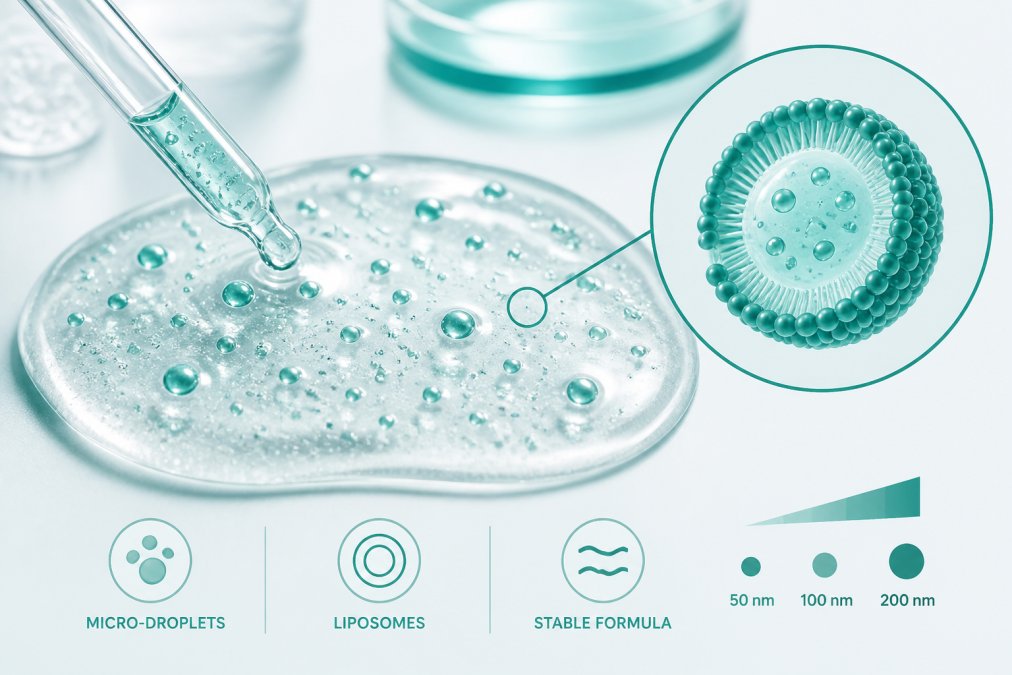
The lipid bilayer consists of two layers of phospholipids with water-loving heads facing outward and fat-loving tails facing inward, creating a stable sphere that encapsulates both hydrophilic and lipophilic active ingredients simultaneously. Most skincare ingredients are either water-soluble or oil-soluble, but not both. Liposomes solve this by creating compartments: hydrophilic ingredients nest in the aqueous core, while lipophilic ingredients embed in the phospholipid shell. A single liposomal system can carry multiple actives that would normally be incompatible.
The phospholipids used, typically derived from soy or egg sources, are naturally occurring in your skin. When a liposome approaches your skin barrier, it's recognized as "self" rather than "foreign," enabling superior dermal penetration compared to synthetic carriers.
Crossing the Skin Barrier
The skin barrier, or stratum corneum, is evolution's defense mechanism against water loss and pathogens. Traditional skincare relies on surfactants that disrupt the barrier (risky), occlusion that hydrates the surface (temporary), or diffusion (slow). Liposomal delivery takes a different approach: because liposomes mimic the lipid composition of the skin barrier, they fuse directly with skin cell membranes through lipid bilayer fusion. The liposome merges with the barrier and releases its payload directly into the cell, achieving transdermal delivery without inflammatory response.
This mechanism allows large molecules that would normally be too big to penetrate to be carried by liposomes, opening possibilities for delivering peptides, proteins, and complex botanical extracts.
How Liposomes Improve Skin Absorption
Bioavailability and Penetration Depth
Bioavailability in skincare means the percentage of applied ingredient that reaches viable skin cells in sufficient concentration to create an effect. Most topical products have bioavailability below 5%. Liposomal formulations achieve 15-30% bioavailability for the same ingredients. This improvement comes from liposomes protecting actives from degradation and delivering them directly into cells rather than the intercellular space.
Penetration depth determines which skin concerns can be addressed. A humectant hydrates the surface. A liposomal vitamin C reaches the dermis where fibroblasts produce collagen. Liposomal delivery extends the active window through gradual release as liposomes fuse with successive cell membranes, producing longer-lasting effects.
Protecting Active Ingredients from Degradation
Many potent actives are chemically unstable: vitamin C oxidizes, retinol degrades under light and heat, peptides break down in certain pH environments. Liposomal encapsulation shields the active ingredient from oxygen, light, and pH fluctuations until it fuses with a skin cell. This means less stabilizer is needed and the ingredient arrives at your skin in its most potent form. A degraded ingredient produces no result; a pristine ingredient produces the intended result.
Liposomal vs Traditional Skincare Delivery
Absorption Rates and Efficacy
Traditional skincare absorption relies on passive diffusion through the stratum corneum, a slow process taking 24-48 hours with inconsistent results depending on skin hydration, pH, and temperature. Liposomal delivery achieves rapid, consistent absorption through active fusion within 2-4 hours, bypassing the slow diffusion step entirely.
Efficacy differences show in real outcomes: a traditional moisturizer improves hydration for 6-8 hours, while a liposomal hydration formula maintains it for 12-16 hours. A traditional retinol requires 8-12 weeks to show visible improvement in fine lines; a liposomal retinol often shows measurable improvement in 4-6 weeks. Faster results lead to consistent use, which compounds outcomes.
Stability and Shelf Life
Traditional skincare loses 10-15% potency per year of storage. Liposomal formulations maintain 90%+ potency for 18-24 months because encapsulation protects actives from the aqueous environment where degradation occurs. This longer shelf life means consistent results throughout the product's lifespan.
Key Benefits of Liposomal Skincare
Enhanced Collagen Production and Elasticity
Collagen production declines about 1% annually after age 25. Topical collagen doesn't work because molecules are too large to penetrate. What works is stimulating fibroblasts to synthesize more collagen through peptides, retinoids, vitamin C, and botanical extracts. Traditional formulations struggle to deliver these to the dermal layer where fibroblasts live. Liposomal delivery reaches dermal fibroblasts within hours, stimulating collagen synthesis more effectively than many alternatives. The result is measurable: improved skin firmness, reduced fine lines, and restored elasticity from increased collagen density.
Reduced Irritation for Sensitive Skin
Potent actives often cause irritation because they hit skin at high local concentrations all at once. Liposomal delivery distributes the active gradually across many cells, producing the intended effect without inflammatory side effects. For people with sensitive skin, rosacea, or eczema, this difference is transformative. You can use potent actives that would normally be intolerable. The protective effect also reduces oxidation byproducts that irritate.
Targeted Delivery for Specific Skin Concerns
By adjusting liposome size, lipid composition, and surface modifications, formulators can engineer liposomes targeting specific skin depths. A formula for dehydration delivers humectants to the stratum corneum; one for elasticity delivers peptides to the dermis. This targeting means each product does exactly what it claims. A well-formulated liposomal routine can accomplish what traditionally required 5-6 products.
Liposomal Magnesium Cream Benefits
Superior Absorption Over Standard Formulas
Magnesium is essential for muscle function and stress response, but absorption has always been the challenge. Magnesium ions are charged and hydrophilic, so they don't penetrate skin easily. Liposomal magnesium encapsulation solves this by protecting magnesium from the aqueous environment and delivering it across the skin barrier. Research shows liposomal formulations achieve significantly higher systemic absorption than traditional magnesium creams.
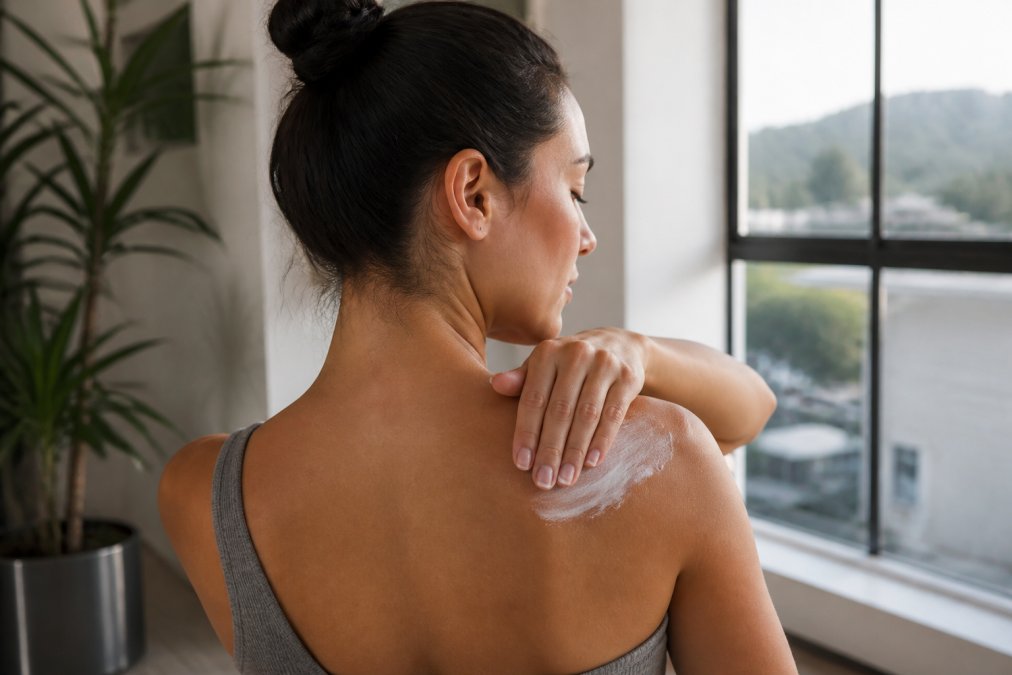
Aftology's liposomal magnesium cream maximizes absorption through our patent-pending delivery system, ensuring the magnesium you apply reaches your muscles and nervous system.
Muscle Recovery and Stress Management
Magnesium depletion is common in people with high stress, intense exercise, or poor sleep. Oral magnesium supplementation works but has limited absorption (20-30% bioavailability) and high doses cause digestive upset. Transdermal magnesium via liposomal delivery bypasses the digestive system, achieving higher bioavailability for many people.
Shop Liposomal Magnesium Cream →
For muscle recovery, topical application allows local delivery to fatigued muscles, providing both systemic absorption and localized benefit. For stress management, consistent use supports nervous system regulation by modulating the stress response and reducing cortisol.
What to Know Before Buying Liposomal Skincare
Ingredient Compatibility and Formulation Quality
Not all liposomal skincare is created equal. The difference between effective and ineffective formulations comes down to liposome size, stability, encapsulation efficiency, and suspension stability. A poorly formulated product might have liposomes that aggregate, low encapsulation efficiency, or unstable phospholipids that oxidize.
Quality indicators include transparent or translucent appearance (cloudiness suggests aggregation), consistent texture over time (separation indicates instability), and clear documentation of liposome size and encapsulation efficiency. Aftology's formulations are designed to research standards, verifying liposome stability and encapsulation efficiency rather than relying on theoretical calculations. Effective liposomal skincare requires careful ingredient selection that works synergistically with the delivery system.
Potential Side Effects and Contraindications
Liposomal skincare is generally well-tolerated, but deeper penetration means ingredients reach concentrations in viable skin cells that traditional formulations don't achieve. For retinoids, a traditional retinol cream might cause mild irritation, while a liposomal retinol can cause significant irritation if you're not adapted. Start low and go slow: use it 2-3 times weekly initially, then increase frequency as your skin adapts.
For people with active skin barrier damage (severe dermatitis, open wounds, severe eczema flares), liposomal formulations can be overstimulating. Pregnancy considerations apply to certain actives regardless of delivery method. Allergies to phospholipids are rare but possible; if you have a documented allergy to soy or egg, avoid liposomal formulations unless they use alternative lipid sources.
DIY vs Professional-Grade Products
Creating stable liposomes requires precise control of temperature, pH, mixing speed, and phospholipid concentration. Most DIY kits produce unstable liposomes with poor encapsulation efficiency. Professional-grade formulations use equipment and processes ensuring consistent liposome size, stability, and encapsulation efficiency, tested for stability over time.
For most users, professional-grade is the only practical option. Aftology's liposomal magnesium cream is formulated to research standards using our patent-pending delivery system, ensuring the liposomal technology functions as intended.
Liposomal delivery in skincare represents a genuine advancement in how active ingredients reach cells where they create change. The science is sound and results are measurable. If you're using traditional skincare without results, the issue might be delivery. A well-formulated liposomal product can deliver results that traditional formulations cannot match.
Choose products from brands that document liposome specifications, verify encapsulation efficiency, and formulate with ingredient compatibility in mind. Research on transdermal delivery systems in cosmetics demonstrates that properly formulated liposomal skincare achieves significantly higher bioavailability than traditional methods.
For muscle recovery and stress management, Aftology's liposomal magnesium cream delivers measurable absorption through our patent-pending encapsulation system at $39.99 with a subscribe-and-save option for 10% off. Magnesium's role in muscle function and stress response supports transdermal magnesium for these applications. Experience deeper absorption, faster muscle recovery, and improved stress resilience, backed by formulation science.
Frequently Asked Questions
Does liposomal delivery really work for topical skincare?
Yes. Liposomal delivery systems significantly improve how active ingredients penetrate the skin barrier. The lipid bilayer structure of liposomes mimics your skin's own cellular membranes, allowing ingredients to cross the stratum corneum more effectively. This means higher bioavailability and faster results compared to traditional topical applications where many active ingredients sit on the surface or degrade before absorption occurs.
What is the advantage of liposomal skincare delivery over standard creams?
Liposomal formulations offer three main advantages: enhanced penetration depth, molecular stability, and controlled release. Traditional creams rely on diffusion alone, which is slow and inefficient. Liposomes act as delivery vehicles, protecting active ingredients from oxidative stress and degradation while guiding them through the skin barrier. This results in 2-5x better absorption rates and longer-lasting effects, making the product more effective at lower concentrations.
How do liposomes protect active ingredients from degradation?
Liposomes encapsulate active ingredients within a phospholipid shell, shielding them from air, light, and environmental factors that cause oxidative breakdown. This protective barrier maintains the molecular stability of sensitive compounds like antioxidants and botanical extracts. Encapsulation also extends shelf life and ensures that the ingredient reaches your skin in its most potent form, rather than partially degraded.
Are liposomal skincare products suitable for sensitive skin?
Liposomal delivery actually reduces irritation for sensitive skin types. Because liposomes allow lower concentrations of active ingredients to achieve the same results as higher concentrations in traditional formulas, there's less potential for irritation. The encapsulation also creates a more controlled, gentler release. However, individual sensitivity varies, if you have compromised skin barrier function or known allergies to specific ingredients, test any new product on a small area first.
What does 'liposomal' actually mean in skincare formulations?
Liposomal refers to the use of liposomes, tiny spherical nanocarriers made from phospholipids (the same material as cell membranes). In skincare, these liposomes encapsulate active ingredients and transport them through the skin barrier more efficiently than traditional delivery methods. It's a nanotechnology application that bridges the gap between what your skin can absorb naturally and what ingredients need to reach to be effective.
How is liposomal magnesium cream different from regular moisturizers?
Liposomal magnesium cream combines deep hydration with targeted mineral delivery. While regular moisturizers sit on the surface and hydrate temporarily, liposomal formulations deliver magnesium through the skin barrier for systemic absorption and muscle recovery benefits. The liposomal encapsulation ensures the magnesium reaches deeper skin layers where it supports cellular repair and stress management, offering benefits beyond surface-level moisturization.
Will switching to liposomal skincare products show results quickly?
Results depend on your specific skin concern and the ingredient used. Enhanced absorption means active ingredients work faster, but skin cell turnover still takes time. Most people notice improvements in hydration and texture within 1-2 weeks. For concerns like collagen synthesis and elasticity, visible results typically appear after 4-8 weeks of consistent use. The liposomal delivery accelerates the timeline compared to traditional formulas, but realistic expectations matter.
This article was written using GrandRanker