

Table of Contents
- Liposomal Magnesium Cream vs Oral Supplements: Key Differences
- Transdermal Magnesium Absorption Rates Explained
- Liposomal Magnesium for Muscle Recovery: Performance Benefits
- Side Effects of Oral Magnesium Supplements
- Comparison Table: Cream vs Oral Form
- Which Form Should You Choose?
- Conclusion
Last Updated: August 19, 2026
Liposomal Magnesium Cream vs Oral Supplements: Key Differences
The choice between liposomal magnesium cream and oral supplements isn't simply about preference, it's about how your body actually absorbs and utilizes magnesium. These two delivery methods operate on fundamentally different biological pathways, producing different outcomes for muscle recovery, sleep quality, and overall mineral balance. At Aftology, we've spent considerable time studying these distinctions because they directly determine whether magnesium reaches the cells that need it most.

The core tension is this: oral supplements offer systemic, whole-body support through gastrointestinal absorption and circulation. Topical liposomal delivery, by contrast, works locally and systemically through transdermal absorption, bypassing digestive barriers entirely. For certain applications, muscle recovery, targeted relief, sensitive digestion, one clearly outperforms the other. For others, the answer depends on your specific goals and physiology.
How Delivery Method Changes Absorption
Magnesium absorption starts the moment it enters your body, but the route matters enormously. Oral supplements dissolve in your digestive tract and pass through the intestinal wall into your bloodstream. This process depends on several factors: your gut health, stomach acid levels, presence of other minerals that compete for absorption, and the specific magnesium compound used.
Liposomal magnesium cream takes a completely different path. Liposomes are tiny lipid spheres that encapsulate magnesium molecules, protecting them as they cross the dermal barrier. This patent-pending technology, like the encapsulation system Aftology uses in its liposomal magnesium cream, allows magnesium to penetrate deeper into skin layers without degradation. The liposomal delivery system doesn't depend on your digestive health or stomach acid. It works regardless of whether you've eaten, whether you have inflammatory bowel conditions, or whether you're taking other supplements.
The practical difference: oral magnesium reaches systemic circulation but loses some potency during digestion. Liposomal cream achieves higher local concentration at the application site while also allowing some systemic absorption through the skin. Neither is inherently "better", they solve different problems.
Systemic vs Localized Relief
Here's where the distinction becomes clinically important. Systemic support means magnesium circulates throughout your bloodstream, supporting mineral balance, nervous system function, and metabolic processes everywhere in your body. Oral supplements deliver this. You take a capsule, it enters your bloodstream, and magnesium distributes to muscles, bones, organs, and the nervous system.
Localized relief means high magnesium concentration exactly where you apply it. If your shoulder is tight after lifting, a liposomal magnesium cream delivers therapeutic levels directly to that tissue. You're not waiting for oral magnesium to circulate and find that specific muscle, you're applying it topically where tension exists.
Most people need both. You might use oral magnesium nightly for sleep support and mineral homeostasis, then apply a liposomal cream to sore muscles after training. The two approaches complement rather than compete.
Transdermal Magnesium Absorption Rates Explained
Skin acts as a barrier, but it's not impenetrable. Magnesium ions are charged particles that struggle to cross the dermal barrier on their own, this is why standard topical magnesium lotions have limited efficacy. The absorption rate of unencapsulated magnesium through skin is measurably lower than encapsulated forms.
Liposomal encapsulation changes this equation. The lipid bilayer of liposomes mimics cell membranes, allowing the liposomal structure to merge with skin cells and deliver magnesium directly into deeper dermal layers. This is the mechanism behind improved bioavailability, the percentage of applied magnesium that actually reaches viable tissue.
The Liposomal Advantage
The liposomal advantage centers on three factors: protection, penetration, and sustained release. Unencapsulated magnesium degrades when exposed to air, heat, and the skin's natural pH environment. Liposomes protect the magnesium payload during storage and application. They penetrate farther into the dermis than free magnesium ions. And they release magnesium gradually rather than all at once, creating sustained therapeutic levels over hours.
Aftology's liposomal magnesium cream uses a gel matrix combined with liposomal encapsulation, which means the product delivers both immediate and sustained absorption. The magnesium continues releasing for several hours. This is fundamentally different from standard magnesium lotions, which offer surface-level hydration without meaningful mineral delivery.
The sensory experience differs too. Standard topical magnesium often feels sticky or leaves residue. Aftology's formulation absorbs cleanly without that greasy feeling, which matters when you're applying it to working muscles before or after exercise.
Bioavailability and Cellular Uptake
Bioavailability measures how much of an ingested or applied substance actually reaches systemic circulation or target tissue in usable form. For oral magnesium, bioavailability ranges widely depending on the compound, magnesium citrate absorbs better than magnesium oxide, for example. Typical oral bioavailability sits between 30-50%, meaning you absorb roughly one-third to one-half of what you consume.
For transdermal liposomal magnesium, the bioavailability at the application site is substantially higher because you're bypassing the digestive system entirely. There's no stomach acid to interfere, no competition from dietary calcium or iron, no gut inflammation reducing absorption. The liposomal structure ensures cellular uptake, magnesium actually enters muscle and skin cells rather than passing through.
This doesn't mean topical magnesium replaces oral supplementation for systemic mineral balance. It means that for localized therapeutic effect, liposomal delivery is more efficient. You achieve meaningful magnesium concentration in target tissue with smaller applied amounts.
Liposomal Magnesium for Muscle Recovery: Performance Benefits
Athletes and active individuals often turn to magnesium for muscle recovery because it plays a direct role in muscle contraction and relaxation. During intense exercise, muscles deplete magnesium, and this depletion contributes to soreness, cramping, and delayed recovery. Replenishing magnesium accelerates the recovery process.
Oral magnesium supports this through systemic circulation, it reaches all muscles and helps restore mineral balance. But localized muscle soreness requires localized treatment. This is where liposomal magnesium cream becomes the practical choice. You apply it directly to fatigued or sore muscles, and the high local concentration of magnesium facilitates faster relaxation and reduced inflammation.

Targeted Relief vs Systemic Support
Targeted relief addresses specific problem areas, the shoulder that's tight from overhead pressing, the calf that's cramping after running, the lower back that's sore from deadlifts. Liposomal magnesium cream excels here. You apply it to the affected area, magnesium penetrates the tissue, and localized inflammation decreases. Most users report noticeable relief within 15-30 minutes.
Systemic support addresses whole-body mineral balance, sleep quality, stress response, and long-term recovery. Oral magnesium supplements are better suited for this role because they circulate throughout your body, supporting metabolic function everywhere. You take magnesium nightly, and over weeks, your baseline magnesium levels improve, which enhances overall recovery capacity.
The most effective approach combines both. Use oral magnesium as a foundation, consistent daily supplementation that maintains healthy magnesium levels and supports sleep. Use liposomal cream as tactical intervention, apply it to specific sore areas after hard training sessions. This dual approach addresses both systemic mineral needs and acute localized discomfort.
Side Effects of Oral Magnesium Supplements
Oral magnesium supplements are generally well-tolerated, but they come with real side effects that topical applications avoid entirely. The most common issue is gastrointestinal distress.
Shop Liposomal Magnesium Cream →
Gastrointestinal Tolerance Issues
Magnesium is osmotically active, meaning it pulls water into your intestines. This is actually why magnesium oxide is used as a laxative, it's effective at moving things along your digestive tract. But if you're taking magnesium for recovery or sleep, loose stools or cramping are unwanted consequences.
The severity depends on the magnesium compound. Magnesium oxide causes the most GI distress. Magnesium citrate and magnesium glycinate are gentler. But even gentler forms cause problems for people with sensitive digestion, inflammatory bowel conditions, or those taking medications that affect gut function.
This is a major advantage of topical liposomal magnesium, it bypasses your digestive system entirely. If you've had negative experiences with oral magnesium supplements, a liposomal cream eliminates that problem. You get magnesium absorption without the digestive side effects.
Dosage Considerations and Long-Term Use
The recommended daily magnesium intake for adults is between 310-420 mg depending on age and sex. Most people don't hit this target through diet alone, which is why supplementation makes sense. But there's a dosage ceiling, consuming excessive magnesium can cause problems.
Long-term use of high-dose oral magnesium can lead to magnesium accumulation in your system, particularly if you have kidney function issues. This is why consistency matters more than occasional high doses. Taking 300-400 mg daily is safer and more effective than taking 1,000 mg sporadically.
Topical magnesium doesn't carry the same systemic accumulation risk because absorption is localized and limited by skin permeability. You can use a liposomal magnesium cream daily without worrying about magnesium buildup in your bloodstream.
Comparison Table: Cream vs Oral Form
| Factor | Liposomal Magnesium Cream | Oral Magnesium Supplements |
|---|---|---|
| Absorption Route | Transdermal (bypasses digestion) | Gastrointestinal |
| Bioavailability | High at application site | 30-50% systemic |
| Onset Time | 15-30 minutes (localized) | 1-2 hours (systemic) |
| Best For | Muscle soreness, targeted relief | Sleep, systemic mineral balance |
| GI Side Effects | None | Possible cramping, loose stools |
| Application | Topical (direct to skin) | Oral (capsule or powder) |
| Systemic Support | Limited | Strong |
| Localized Effect | Excellent | Moderate |
| Cost per Dose | Higher upfront | Lower per unit |
| Long-term Safety | No accumulation risk | Monitor for excessive intake |
Which Form Should You Choose?
The answer depends on your primary goal. Are you seeking whole-body mineral support and better sleep? Oral supplementation is the foundation. Are you dealing with specific muscle soreness or localized tension? Liposomal cream is the more direct solution.
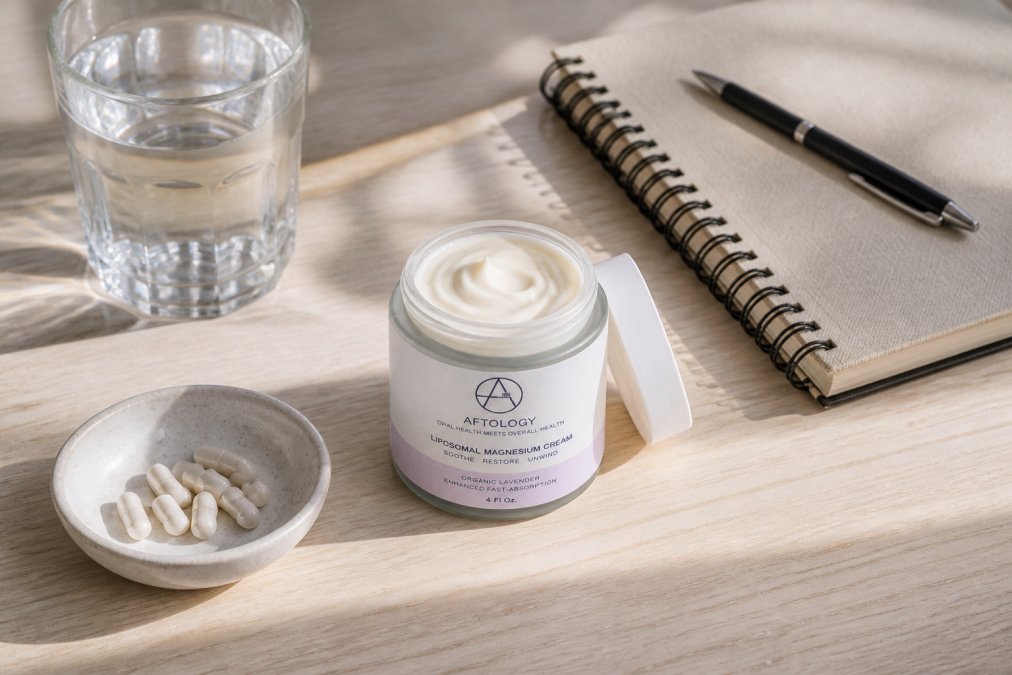
For Muscle Recovery and Athletic Performance
Athletes benefit most from combining both approaches. Take oral magnesium daily, 300-400 mg in the evening to support sleep and systemic recovery. This maintains baseline mineral levels and helps your body adapt to training stress.
Then apply a liposomal magnesium cream to sore or fatigued muscles after hard workouts. The localized delivery addresses acute muscle soreness directly. Within 20-30 minutes, you'll notice reduced tension and faster relaxation. This is particularly effective for delayed-onset muscle soreness (DOMS), that deep ache that peaks 24-48 hours after intense training.
For athletes, Aftology's liposomal magnesium cream offers an advantage beyond standard topical options. The liposomal encapsulation ensures deeper penetration and sustained release, so the magnesium actually reaches the muscle tissue rather than just moisturizing the skin surface. You're getting therapeutic magnesium delivery, not just a nice-feeling lotion.
For Sleep Quality and Relaxation
Oral magnesium is the clear choice here. Magnesium supports nervous system relaxation and helps regulate sleep-wake cycles. Taking 300-400 mg of magnesium glycinate or citrate 30-60 minutes before bed improves sleep onset and sleep quality for many people.
A topical magnesium cream can complement this, apply it to your neck, shoulders, or lower back 10-15 minutes before bed. The localized relaxation effect enhances the systemic support from oral magnesium. You're signaling to your nervous system that it's time to wind down through multiple pathways.
But don't expect topical magnesium alone to solve sleep problems. You need the systemic circulation that only oral supplementation provides. The cream is supplementary, not primary.
For Sensitive Digestion
If you have IBS, Crohn's disease, ulcerative colitis, or general digestive sensitivity, oral magnesium supplements often cause problems. Even "gentle" forms like magnesium glycinate can trigger cramping or loose stools in people with compromised gut function.
This is where liposomal magnesium cream becomes genuinely valuable. You get magnesium absorption without digestive stress. Apply it daily to support muscle function and mineral status without triggering GI distress.
You might still want some systemic magnesium support, consider food-based sources like pumpkin seeds, almonds, or leafy greens instead of supplements. But if you need therapeutic magnesium levels and your digestion can't handle supplements, topical liposomal delivery is a practical solution.
The choice between liposomal magnesium cream and oral supplements isn't either-or, it's about using each form strategically. Oral magnesium builds your foundation: consistent daily intake that supports sleep, stress response, and mineral balance. Liposomal cream provides tactical intervention: targeted relief for sore muscles and localized tension where you need it most. For most people pursuing serious muscle recovery and whole-body wellness, both belong in your routine. Start with a quality oral magnesium supplement taken consistently, then add a liposomal cream like Aftology's for acute muscle soreness and localized support. This combination addresses both systemic needs and specific performance demands.
Frequently Asked Questions
Is magnesium cream more effective than oral supplements for muscle recovery?
Neither is universally 'better', they serve different purposes. Liposomal magnesium cream delivers targeted relief directly to affected muscles through transdermal absorption, making it ideal for localized soreness and post-workout recovery. Oral supplements provide systemic support for mineral balance and whole-body relaxation. For muscle recovery specifically, the cream's fast-acting, localized approach often produces quicker results, while oral forms support long-term mineral homeostasis.
How does liposomal delivery improve magnesium absorption compared to standard topical lotions?
Liposomal encapsulation wraps magnesium molecules in lipid spheres that mimic cell membranes, dramatically improving cellular uptake through the dermal barrier. Standard topical lotions sit on the skin surface with minimal bioavailability. Liposomal technology increases skin permeability and allows magnesium to penetrate deeper tissues. This results in 2-5x better absorption rates and faster therapeutic efficacy compared to conventional creams.
What are the main side effects of oral magnesium supplements?
Oral magnesium commonly causes gastrointestinal issues, including loose stools, diarrhea, nausea, and abdominal cramping, especially at higher dosages. Magnesium chloride and citrate forms are more likely to cause these effects than other types. These side effects can limit long-term compliance and force users to reduce dosage below therapeutic levels. Topical alternatives bypass the digestive system entirely, eliminating GI tolerance problems while still supporting mineral balance.
Can topical magnesium provide the same systemic benefits as oral supplements?
Topical magnesium can contribute to systemic mineral balance, but oral supplementation remains the primary method for achieving full-body mineral homeostasis. Transdermal absorption does allow some magnesium to enter the bloodstream and support sleep, relaxation, and metabolic pathways. For comprehensive systemic support, many people combine both forms: using cream for targeted muscle relief and taking oral supplements for sustained, whole-body wellness.
This article was written using GrandRanker